

Lid design quietly shapes kids’ daily hydration habits
When parents compare a kids water bottle with a straw against a spout or an open top, the conversation usually centres on spills or cleaning. Kids, however, are thinking about something completely different.
They’re thinking: How fast can I drink? Can I use it with one hand? Will anyone comment on it? Is it annoying?
Children interact with their water bottles dozens of times a day. Small design details quietly shape how often they drink, whether they finish the bottle, and whether it gets left untouched at the bottom of a school bag.
We’re not here to talk about what’s right or wrong when it comes to lids. It’s about friction. The less effort a bottle requires (socially and physically), the more it gets used.
The short answer
A kids water bottle with a straw gets drunk from most often, because a child can sip one-handed without tipping or stopping what they’re doing; it also needs the most cleaning and is the first lid to wear out. A spout lid is the middle ground: quick, quiet and simpler to maintain, good from about age eight. An open-mouth bottle is what older children choose because it looks grown-up, at the cost of needing two hands and a tilt. For most primary-age children, a straw lid with a locking cover and a straw you can remove and brush is the right call; by secondary school, let them choose.
Straw vs spout vs open mouth at a glance
| Straw lid | Spout lid | Open mouth | |
|---|---|---|---|
| Effort to drink | Lowest: one hand, no tilt | Low: one hand, slight tilt | Higher: two hands, full tilt |
| Noise in class | Some suction noise | Quietest | Quiet, but visible |
| Spill risk while drinking | Lowest | Low | Highest if rushed |
| Leak risk in a bag | Medium (hinge and straw seal) | Low with a locking cover | Lowest with a gasketed screw cap |
| Cleaning | Most parts: straw, seal, hinge | Moderate | Easiest |
| Smell build-up | Fastest if not dried | Moderate | Slowest |
| Parts that wear | Straw, seal, hinge | Seal, cover | Gasket only |
| Typical age | 4 to 11 | 8 and up | 11 and up |
| How it looks to a 12-year-old | Babyish | Fine | Grown-up |
How kids actually drink at school
Hydration at school rarely looks calm and deliberate.
It looks like:
- A quick sip between classes
- Drinking while standing in a corridor
- One-handed use while holding books
- A fast gulp during sports practice
- A distracted sip during group work
Speed matters.
Children are rarely sitting quietly with both hands free. If a bottle requires twisting, tilting carefully, or using two hands, it often gets skipped in the moment.
Effort adds up. Even small interruptions reduce usage.
That’s why lid style plays such a serious part in daily habits.
Straw lids: effortless but high maintenance
Straw lids are popular for a reason.
Kids like them because:
- There’s no tipping involved
- It feels quick and easy
- They’re familiar from sports bottles
- They allow drinking without breaking eye contact in class
From a child’s perspective, straw lids feel seamless.
But here’s where things shift.
Straw systems tend to have:
- Internal tubes
- Rubber seals
- Flip components
- Narrow air channels
Those extra parts create cleaning challenges. Residue from flavoured drinks or diluted juice can linger inside the straw or seal. If components aren’t fully dried, smells develop quickly.
This is often when parents start noticing that the bottle “smells funny” even after washing. Our post on why water bottles smell and how to stop it explains what’s going on.
Breakage is another factor. Straw lids involve hinges and flexible seals that can wear down over time. When that happens, leaks begin.
Straw lids are low effort to drink from, but higher effort to maintain.
For older children who want the convenience but need durability, options like our Just Bottle x Aleks Petrović 1L Glass Bottle with a pop-up straw lid combine ease of use with a clean, simple internal structure that’s easier to rinse and dry thoroughly. For a stainless steel bottle, a straw lid that comes with spare straws solves the two most common complaints at once: a lost straw and a stained one.
What to look for in a kids water bottle with a straw
- A cover that locks over the straw, so it can’t pop open under a textbook.
- A straw you can pull out and brush, ideally with spares supplied.
- A seal that comes out for drying, rather than one glued in place.
- A bottle light enough to lift one-handed when full: 500ml for primary school, 750ml from about age ten.
- A colour they picked, which does more for daily use than any feature above.
Our guide to which leak proof water bottles survive a school term has a two-minute test you can run at home before term starts.
Spout lids: the middle ground
Spout lids sit somewhere between straw and open-mouth designs.
They offer:
- Controlled flow
- Less sloshing
- A smaller drinking opening
- A quieter, less conspicuous sip
That “quieter” detail matters more than parents might expect. Some children prefer lids that don’t draw attention in a classroom. Loud suction sounds or dramatic tipping can feel awkward in certain age groups.
Spouts allow drinking without tipping the bottle as steeply as an open mouth, but without the internal complexity of a straw system.
However, not all spout lids are similar. Some designs still include multiple internal components or small seals that can trap moisture. Simpler flip-spout designs with fewer moving parts tend to last longer.
The sweet spot is balance: quick access, moderate control, minimal maintenance.
Open mouth bottles: the ‘grown-up’ signal
Open mouth bottles often appeal to older children and pre-teens for a different reason entirely.
They look mature.
They resemble what older siblings, teachers or even parents carry. That visual alignment matters. Children begin to signal independence through everyday objects long before they articulate it.
No one wants to carry what feels like a “baby bottle.”
Open mouth designs communicate:
- Simplicity
- Confidence
- “I don’t need a special lid”
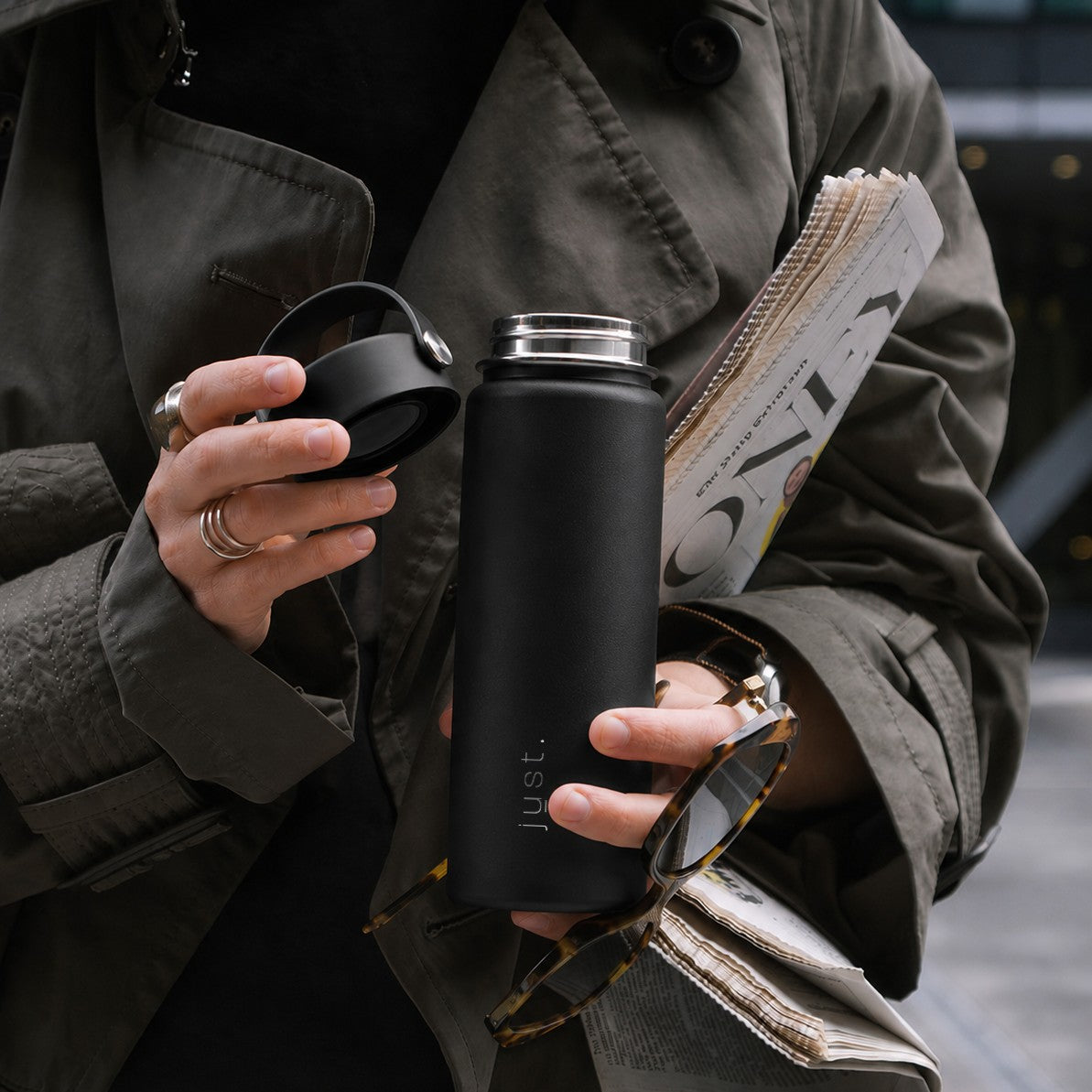
Stainless steel bottles like the 1L Nomad often fall into this category. With a wide mouth opening and clean silhouette, they feel age-flexible and durable.
There are downsides, of course:
- They require tilting
- Spills are more likely if rushed
- Drinking one-handed can feel awkward
But for some children, especially those moving into secondary school, the social benefit outweighs the minor inconvenience. And because the lids on a bottle like the Nomad are interchangeable, a child can switch between a straw lid and a plain cap as they get older without needing a new bottle.
The role of effort and visibility
Children are highly sensitive to effort, even if they can’t explain it.
If a bottle:
- Requires two hands
- Needs careful positioning
- Feels heavy when lifted
- Makes noticeable sounds
it will likely be used less often.
Visibility also matters.
If a bottle stands out dramatically (in shape, size or noise) it may attract comments. Most children prefer to blend in rather than stand out, particularly in middle years.
That’s why neutral, minimal designs often see more consistent use over time. Bottles like the Nomad range or the Titan Tumbler (for older teens) align with what many adults carry, reducing that sense of difference.
Blending in can be surprisingly powerful.
Why kids don’t tell parents the real reason they stopped using a bottle
When a bottle stops coming home empty, parents often hear vague explanations: “It’s annoying.” “I don’t like it.” “It leaks.”
The real reasons are often more subtle:
- It makes a loud noise
- It smells slightly
- The lid feels awkward
- Someone commented on it
- It takes too much effort to use quickly
Children don’t always articulate these details. It’s not defiance. It’s discomfort that’s hard to explain.
Understanding the straw versus spout conversation through this lens changes the approach. It becomes less about which lid is technically “best” and more about which lid fits your child’s daily rhythm.
Letting kids choose isn’t giving up control
Some parents hesitate to involve children in choosing their bottle, worrying it becomes a negotiation.
In reality, small choices create ownership.
Letting a child choose:
- Lid style
- Size
- Colour
- Handle or no handle
can dramatically increase consistent use.
Autonomy reduces resistance.
This doesn’t mean following every trend. It means offering age-flexible, durable options that respect growing identity. A 550ml Nomad may suit younger primary years, while a 1L Nomad or Titan Tumbler might feel more appropriate later on. We’ve written more on why this matters in how kids’ water bottle design affects their drinking habits.
The goal here is daily use, because hydration matters more than the lid.
Frequently asked questions about kids water bottles with straws
Are straw water bottles good for kids?
Yes, for most children under about eleven. They need one hand and no tilting, so they get used more often. The trade-off is cleaning: the straw and seal need to come out and dry after every wash.
What age should a child stop using a straw water bottle?
There’s no fixed age. Many children move to a spout or open-mouth bottle around secondary school because it looks more grown-up. If your child still uses the straw happily, there’s no reason to change it.
Do straw lids leak in a school bag?
They can, if the cover pops open under pressure or the straw seal has stretched. Choose a lid with a locking cover, keep the bottle in an outside pocket upright, and replace the seal when it looks worn.
How do I clean a kids water bottle with a straw?
Take the straw and seal out, wash them separately with a straw brush, and leave everything apart to dry overnight. A monthly soak in warm water with a little white vinegar clears any lingering taste.
Spout or straw: which is better for a fussy drinker?
Straw, almost always. The less effort drinking takes, the more sips happen without thinking. Switch to a spout only if noise or embarrassment is putting them off.
Can I change the lid on a kids water bottle instead of buying a new one?
On many stainless steel bottles, yes. A bottle with interchangeable lids lets you start with a straw and move to a sports cap or screw cap later, which is cheaper and keeps the bottle they already like.
Design shapes habits quietly
Children rarely think about hydration in abstract health terms. They think about convenience, comfort and social context.
A bottle that feels easy gets used. A bottle that feels awkward gets ignored.
The difference between straw, spout and open mouth isn’t just functional. It’s behavioural.
When choosing a bottle, look beyond cleaning checklists and leak claims. Think about speed. Think about effort. Think about identity.
And when in doubt, let your child test the options. They’ll tell you what works, sometimes without even realising they are.
If you’re exploring durable, age-flexible designs built from stainless steel, glass or high-quality rPET, browse the Just Bottle range to find a lid style that fits your child’s day (not just your checklist).