
The Detail Guests Carry Home Says More About Your Brand Than What They Leave Behind
As the festive season approaches, hotels, wellness retreats and fitness studios are preparing for a surge in guests, corporate events and end-of-year travel. Expectations are higher than ever, and guests now notice the details that used to go unseen. From how water is served in-room to the quality of the amenities they take home, every touchpoint shapes how they perceive your brand.
That's why more businesses in the hospitality and wellness industry are turning to private label water bottles as a simple yet powerful way to stand out. These bottles combine function, sustainability and branding in one gesture: they refresh, reduce waste and represent your identity long after the guest checks out.
No matter if it's the bottle on a hotel nightstand, the one handed out at a spa reception or the one tucked inside a gym welcome pack, branded reusable bottles have become the quiet signature of thoughtful, future-focused hospitality.
What follows is a working guide rather than a sales page. We'll cover the terminology (which trips up more procurement teams than you'd expect), materials, decoration methods, minimum order quantities, lead times, compliance rules that are tightening across Europe and the Gulf, and how to actually measure whether the switch paid for itself.
Private Label Bottled Water vs Private Label Water Bottles
These two phrases get used interchangeably, and they describe very different products.
Private label bottled water means single-use plastic bottles filled with drinking water and labelled with your brand. You buy the water, and the packaging is disposable. It is a beverage supply arrangement, usually handled by a bottling plant or co-packer.
Private label water bottles, the reusable kind, means durable vessels in stainless steel or recycled plastic, branded with your identity and designed to be refilled for years. You buy the bottle once.
Most hospitality and wellness businesses that start out looking for the first end up choosing the second. Single-use plastic is being restricted in a growing number of markets. Guests increasingly read disposable bottles as a lapse rather than a service. And a bottle that leaves with the guest keeps working, while a label that goes in the recycling does not.
Just Bottle produces the reusable kind. If you need bottled drinking water for a specific event, a beverage co-packer is the right partner. If you want a branded bottle that guests keep, read on.
White Label, Private Label, OEM and Bespoke: What the Terms Actually Mean
Suppliers use these words loosely, which makes quotes hard to compare. Here's the plain version.
- White label: an existing, unbranded product that several buyers can order. You add your logo. Fast, cheap, and your competitor down the road may end up with the same bottle in a different colour.
- Private label: an existing product line customised for you, typically with your logo, your colourway, your lid choice and sometimes your packaging. This is where most hotel and gym projects sit, and it's the sweet spot for cost and lead time.
- OEM (original equipment manufacturing): the factory builds to your specification. New mould, new form, your intellectual property. Expect high minimums (often 5,000 to 10,000 units) and tooling costs running into thousands.
- ODM (original design manufacturing): the factory's design, lightly adapted. Sits between white label and OEM.
- Bespoke or custom: a marketing word that could mean any of the above. Always ask which one a supplier means before you compare pricing.
A boutique hotel ordering 300 bottles does not need OEM tooling. A national gym chain rolling out 40,000 units across 200 sites might. Knowing which conversation you're in saves weeks.
How Hotels Use Private Label Bottles to Elevate the Guest Experience
In luxury and boutique hospitality, sustainability has become part of the service. According to Booking.com's 2024 Sustainable Travel Report, over 75% of travellers say they notice a hotel's environmental practices when booking. The shift away from single-use plastics isn't just regulatory, reputational.
For high-end hotels, private label bottles have quickly replaced disposable plastic water. In 4-5-star properties, they now appear across multiple touchpoints, from the minibar to conference suites, wellness areas and VIP transfers. When designed well, they feel like part of the brand's lifestyle, not marketing ploys.
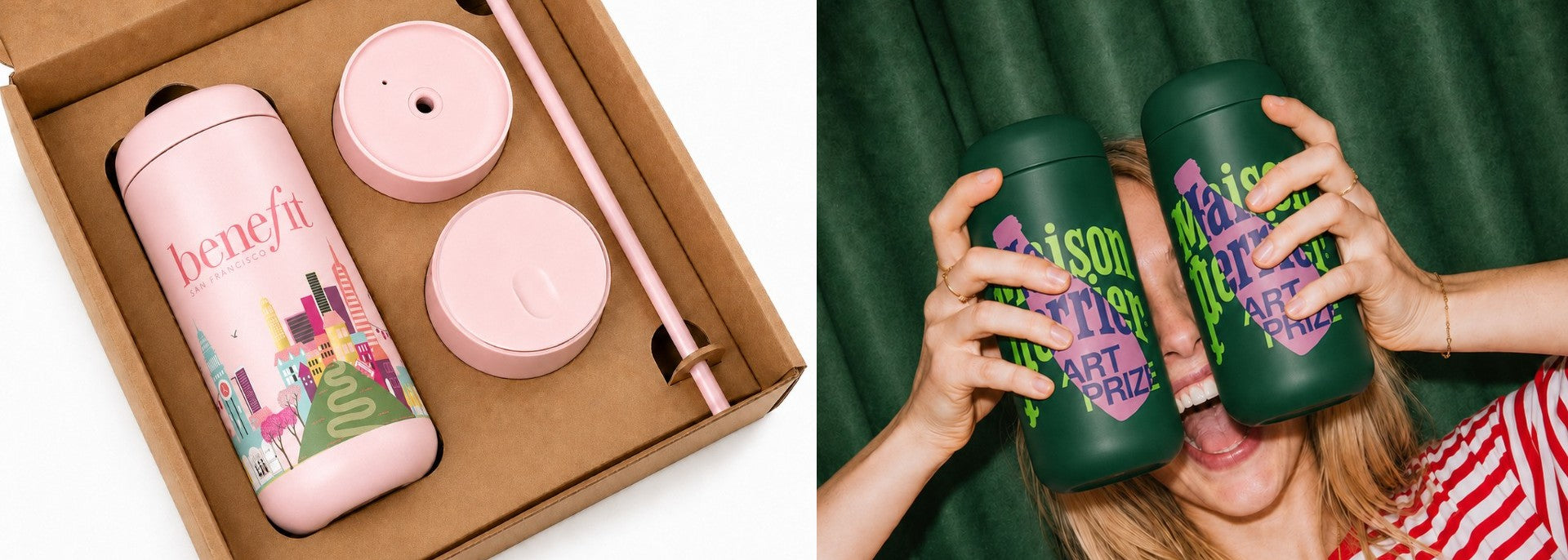
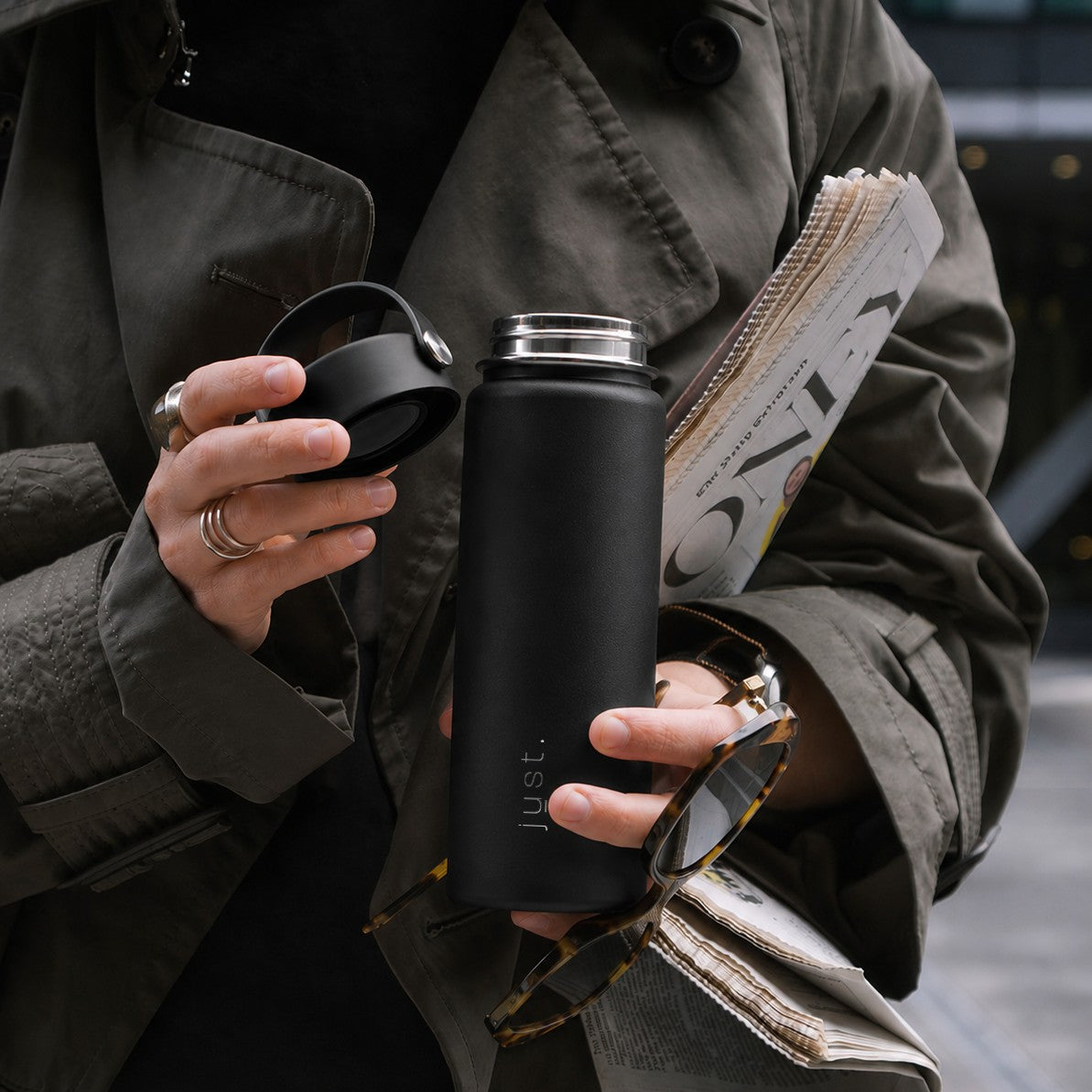
Imagine a matte almond or slate stainless-steel bottle embossed with a hotel crest, durable enough to last, yet luxe enough to use daily. Guests don't leave it behind, instead, they take it home as a keepsake. That quiet act extends your brand's presence long after checkout, turning every refill into a subtle reminder of your service and attention to detail.
Hotels also love the operational benefits: replacing single-use bottles lowers waste management costs, simplifies procurement, and supports ESG targets that are increasingly scrutinised by investors and guests alike.
At Just Bottle, many of our hospitality partners now use our stainless-steel insulated bottles or Reclaim bottles, both premium-grade, customisable options that balance luxury design with real impact. Each order funds the removal of ocean plastic from coastal communities, meaning every guest touchpoint contributes to measurable good.
Mapping the Touchpoints: Where a Branded Bottle Earns Its Keep
Property teams often start with guest rooms and stop there. The properties getting the best return treat the bottle as an amenity system rather than a single placement.
| Touchpoint | Typical spec | What it replaces |
|---|---|---|
| Guest room and turndown | 500ml insulated stainless steel, subtle engraving | Two single-use bottles per night, per guest |
| Suites and club floors | 750ml, gift box, optional guest name engraving | Premium mineral water service |
| Conference and meeting rooms | 750ml or 950ml, carafe-friendly, stackable | Bottled water on tables, plastic cups |
| Spa, pool and gym | Lightweight rPET or recycled plastic, sports lid | Paper cups at water coolers |
| Airport transfers and shuttles | Slim 400ml to 500ml, cup-holder safe | Single-use bottles in vehicle chillers |
| Loyalty tiers and long-stay guests | Limited colourway or seasonal edition | Generic welcome gift |
| Staff and back of house | Same range, different colour | Disposable cups in staff canteens |
That last row matters more than people assume. When housekeeping and front office carry the same bottle guests see, the sustainability story reads as genuine rather than staged. Guests notice.
Refill Infrastructure: The Part Nobody Plans For
A reusable bottle without somewhere to refill it is just a nicely engraved paperweight. Before the first order lands, work out the refill plan:
- In-room: filtered carafe, an under-sink filter tap, or a filtered water point on each floor. Signage should tell guests the tap water is treated, because many won't assume it.
- Public areas: filtered still and sparkling dispensers near the gym, spa, pool and lobby. Chilled matters. Guests will refill from a cold dispenser and won't refill from a warm one.
- Meeting floors: carafes and a dispenser per breakout area, so you're not carting cases of plastic through service corridors.
- On-site filtration and bottling: larger properties increasingly install their own micro-filtration and glass bottling systems for restaurant service, then use branded reusables for rooms and mobile use.
- Cleaning: confirm your bottles are dishwasher safe, or provide a small brush and care card. Most vacuum-insulated stainless steel bodies prefer hand washing to protect the exterior coating, while lids and straws are usually dishwasher friendly.
Housekeeping needs a rule too. Bottles left in rooms after checkout go to a laundering and reissue process, or to staff, or to a local partner. Left undecided, they quietly end up in lost property or the bin, which defeats the point.
Fitness and Wellness Branding: Bottles That Build Belonging
Across gyms, yoga studios and boutique wellness spaces, private label water bottles are becoming the new loyalty card. Members want to feel part of something, a brand that shares their values and reflects their lifestyle.
A global Les Mills report found that almost 60% of people stay loyal to fitness brands that create community. A well-designed branded bottle does that quietly but effectively. It travels between workouts, becomes part of people's daily hydration routine, and sparks recognition when someone spots the same design at the park or in a class.
For fitness brands, the functional details matter: grip texture, leak-proof lids, straw options for on-the-move sipping, and insulation that keeps drinks cold during long sessions. Larger logos and bold colours often work better in this environment, aligning with the energy and visibility of the space.
Our recycled plastic bottles, available in sizes like the 550ml Pioneer or 950ml Jumbo Pioneer, are designed for exactly that: ergonomic grip, powder-coated durability, and plenty of surface area for impactful branding. Studios often co-brand their bottles with challenge slogans or seasonal colours, creating instant collectability and a sense of belonging that goes beyond a logo on a wall.
Membership Models That Actually Work
The studios seeing real return don't just hand bottles out. They build them into a mechanic:
- Onboarding pack: bottle included in the joining fee, which shifts the bottle from cost line to revenue-supported amenity and gives new members a reason to come back within week one.
- Milestone reward: 50 classes, 100 classes, a year of membership. Scarcity does the work. Members chase the 100-class colourway.
- Challenge editions: a six-week transformation programme, a summer series, a charity ride. Date-stamped, never repeated, quietly collectible.
- Retail SKU: sold at reception at a healthy margin. Boutique studios routinely find bottles outsell every other piece of branded merchandise because the use case is daily rather than occasional.
- Refill discount: a small credit on smoothies or supplements when members bring the bottle in. Cuts your cup costs and reinforces the habit.
- Corporate wellness: bottles supplied to a client company's staff with dual branding, which turns a B2B contract into a visible campaign.
One detail that repeatedly separates a bottle members love from one they abandon: capacity relative to the class. A 45-minute HIIT session or a hot yoga class needs 750ml minimum, and many members prefer a litre. Give someone a 400ml bottle for Bikram and they'll be queuing at the fountain mid-class, then leaving the bottle in the changing room.
Retreats and Eco Resorts: Designed for the Conscious Traveller
Wellness retreats, eco-lodges and nature-based stays lead the way in experiential sustainability. Their guests are already seeking slow living, minimal waste and meaningful connection, and everything in the environment, right down to the bottle on the bedside table, should reflect that ethos.
The World Travel & Tourism Council reports that 81% of travellers now prefer eco-conscious stays. Reusable private label bottles are one of the easiest, most visible proof points of that commitment.
In these spaces, the design language shifts. Instead of bright logos, it's about natural materials, calming tones and subtle engraving. Muted shades like sage, clay, almond or ocean blue blend perfectly with the surroundings. At Just Bottle, we've worked with eco-resorts to create bespoke colourways that reflect their landscape: forest green for mountain lodges, sand tones for desert retreats, blush for wellness sanctuaries.
When guests photograph their surroundings, those bottles often make their way into the shot, becoming part of the visual storytelling that spreads across social media. That's organic marketing at its most authentic: your brand shared through real experiences, not paid campaigns.
And with every Just Bottle order funding the collection of ocean-bound plastic and supporting dignified work in coastal communities, your impact story deepens. Guests see and feel that connection, a tangible reminder that sustainability doesn't stop at aesthetics.
Island, Desert and Remote Properties: A Different Calculation Entirely
For a resort in the Maldives, single-use water isn't just an environmental problem. It's a logistics and cost problem. Cases of bottled water arrive by boat, seaplane or 4x4, and the empties leave the same way, often at a higher cost than the full ones came in.
Properties in these settings tend to build the full loop: desalination or borehole water, multi-stage filtration and UV treatment, glass carafes for dining, and a branded reusable bottle issued at check-in that the guest keeps. The bottle stops being an amenity and becomes infrastructure. It also happens to be the single most photographed item in a guest's room after the view.
Materials: What Your Bottle Is Actually Made Of
Material choice drives cost, weight, decoration options, guest perception and how long the thing survives. Here's the honest comparison.
Stainless Steel (304 / 18-8 and 316)
The default for premium hospitality. Grade 304 stainless, often written 18/8, resists corrosion, doesn't retain flavour and takes a laser engrave beautifully. Grade 316 adds molybdenum for extra corrosion resistance, which matters for coastal properties and anyone filling bottles with electrolyte or citrus drinks. Double-wall vacuum insulation typically holds cold for around 24 hours and hot for around 12, depending on the fill, the ambient temperature and the lid design. Heavier and pricier than plastic, and worth it when the bottle is meant to signal quality.
Recycled Plastic and rPET
Lighter, lower cost, brilliant for gyms, events, kids' clubs and anywhere near a pool where glass or heavy steel is a hazard. rPET means recycled polyethylene terephthalate, and good suppliers can document the recycled content percentage. Tritan and PP options offer clarity and impact resistance. Look for BPA-free and BPS-free confirmation as standard, not as a selling point.
Ocean-Bound and Reclaimed Plastic
Plastic collected from coastal areas at risk of entering the sea, then cleaned, pelletised and remoulded. The material performs like conventional recycled plastic, but the story is materially different and it's verifiable when the supply chain is documented. Our Reclaim range sits here.
Aluminium
Light, infinitely recyclable, and usually lined internally. Excellent for event giveaways and large-volume conference use where weight and freight cost matter. Less premium in the hand than steel, and dents rather than scratches. Aluminium also comes with some health concerns when the plastic lining inside the bottle eventually breaks down.
Glass and Borosilicate
Unbeatable for taste neutrality and for in-restaurant or in-room carafe service. Borosilicate handles thermal shock better than soda-lime. Not suitable for gyms, pools, boats or anywhere with a hard floor and bare feet.
A quick reality check on weight, since it decides freight cost: a 500ml insulated steel bottle runs roughly 280g to 350g empty, an rPET bottle of the same capacity around 80g to 120g. On a 10,000 unit order, that difference alone can move air freight from unthinkable to viable.
Branding Methods: Getting Your Logo Right
The decoration technique changes how your brand reads. A crisp laser engrave on matte steel whispers luxury. A four-colour print on a bright bottle shouts energy. Neither is wrong, but a mismatch between the two is the most common design error we see.
- Laser engraving: burns through the powder coat to reveal the steel beneath, giving a permanent, tonal mark. Never fades, never peels. Best for crests, wordmarks and fine line work. Colour isn't available, so gradients and photographic logos won't translate.
- UV printing: full-colour, high-detail, sits on the surface. Handles gradients and complex artwork. Excellent durability on modern machines, though low quality UV printing will eventually show wear on a bottle that lives in a gym bag for three years.
- Screen printing and pad printing: cost-effective for one to three spot colours at volume. Pad printing wraps curved and recessed surfaces that screen printing can't reach.
- Debossing and embossing: physical texture in the body or lid. Subtle, tactile and premium, particularly for a crest or monogram.
- Powder coating and Pantone matching: the body colour itself is branding. Matching to a Pantone reference (matte, gloss or soft-touch finish) is often more powerful than the logo. A sage green bottle with a small engraved mark reads more expensive than a white bottle with a large printed one.
- Wrap and full-body print: maximum visual impact for challenge editions, festivals and sponsorship activations.
Artwork Files: What Your Supplier Actually Needs
Supply vector artwork (AI, EPS or PDF) with fonts outlined and a stated Pantone reference. A JPG pulled from your website will cost you a week while someone redraws it. Confirm the print area in millimetres before you finalise the layout, because a logo designed for a business card rarely wraps well around a 73mm diameter cylinder. And ask for a physical pre-production sample on any order above a few hundred units. Screen colours lie, particularly for matte finishes and metallics.
Costs, MOQs and Lead Times: The Numbers Behind the Project
Pricing depends on material, capacity, insulation, decoration count and volume, but the shape of it is predictable. Recycled plastic bottles sit at the accessible end. Single-wall steel costs more. Double-wall vacuum insulation costs more again. Every additional print position, every additional spot colour and every custom Pantone adds a setup charge that gets amortised across the run, which is why unit pricing drops sharply between 250 and 1,000 units, then flattens.
Minimum order quantities vary by supplier and by how much customisation you want. Stock colourways with a single logo position can start as low as 25-50. Custom Pantone bodies usually need a higher minimum (in the thousands) because the factory is mixing coating for your run alone. Full OEM with new tooling sits higher still.
On timing, build backwards from your launch date and allow for: artwork approval and digital mockup (a few days), physical pre-production sample and approval (one to two weeks, plus courier time), production (typically two to four weeks depending on decoration and volume), and freight. Sea freight from Asia to Europe or the USA runs roughly eight to twelve weeks door to door depending on route and port congestion. Air freight is days rather than weeks and costs several times more. Add customs clearance and, for a Q4 or Chinese New Year window, add contingency, because factory shutdowns and peak-season freight rates are entirely predictable and still catch people out every year.
Running the Numbers Against Single-Use
The case is usually easier to make than procurement teams expect. Take a 120-room property at 70% occupancy, providing two 500ml single-use bottles per room per night. That's roughly 61,000 bottles a year, before you count meeting rooms, the gym and the spa. Now add the parts that don't appear on the water invoice: storage space, staff time restocking minibars and trolleys, chilling, waste collection, and in some markets a packaging levy.
Against that, a reusable programme is largely a one-off capital cost plus filtration and a top-up order each year for the bottles guests take home (which, to be clear, is the outcome you want, not leakage). Most properties we work with find the payback lands inside the first year, and that's before any value is assigned to the brand impressions a guest generates while carrying your logo through an airport.
Regulation and Compliance: What's Changing
Single-use plastic rules keep tightening, and hospitality is squarely in scope. The specifics vary by market and change often, so treat this as a prompt to check your local position rather than legal advice.
- European Union: the Single-Use Plastics Directive (2019/904) restricted a range of disposable items and set collection and recycled-content targets for beverage bottles. The Packaging and Packaging Waste Regulation goes further on reuse and refill obligations, and the revised Drinking Water Directive pushes member states to improve access to tap water in public spaces, which is exactly the infrastructure a reusable programme depends on.
- United Kingdom: the Plastic Packaging Tax applies to packaging with less than 30% recycled content, and Extended Producer Responsibility fees shift disposal costs onto the businesses placing packaging on the market.
- United Arab Emirates: Dubai and the wider UAE have moved through a phased ban on single-use plastic items, starting with carrier bags and extending to a broader list of disposables. Hotels operating here have largely already made the switch on in-room water.
- Elsewhere: Bali, several Indian states, Kenya, Rwanda, Canada and a growing number of US states and cities all restrict specific single-use plastics, and national park and island destinations often go further than their national rules.
On product safety, ask your supplier for documentation rather than reassurance. Relevant standards include FDA food-contact compliance, EU Regulation 1935/2004 for food-contact materials, LFGB testing (a strict German standard often used as a quality benchmark), REACH for chemical substances, Prop 65 for the Californian market, and BSCI or SMETA audits for social compliance at the factory. If you're supplying a listed group, their procurement team will ask for these anyway.
Choosing the Right Private Label Bottle Partner
Finding the right partner for your private label water bottles can make or break your project. Beyond design and price, there's a full checklist of practical and ethical considerations that define long-term success.
Quality and material integrity: Look for durable stainless steel, BPA-free interiors, and tested insulation. Ask about third-party certifications like LFGB or FDA compliance, these prove your bottles are safe, durable, and made to last. Thicker steel walls, high-quality powder coating and precise laser engraving are signs of a premium supplier.
Branding and customisation: A good manufacturer will offer multiple techniques, engraving, UV printing, Pantone colour matching, and help you visualise your product before production through digital mockups or samples.
Production and MOQ: Smaller boutique hotels might need lower minimum order quantities, while global chains or gym networks benefit from scalable production. A reliable partner will guide you through both without compromising lead times.
Sustainability standards: Ask about sourcing, energy use and recycling programmes. The most forward-thinking suppliers integrate circular design, encouraging reuse and responsible end-of-life management.
Logistics and after-sales: Global fulfilment, drop-shipping and custom packaging options all add value for hospitality clients. Warranty coverage, reorder support and responsive communication matter as much as the product itself.
At Just Bottle, we manage each of these elements in-house. From initial concept and sample testing to production and fulfilment, our focus is on helping businesses express their brand through products that genuinely last.
Ten Questions Worth Asking Before You Commit
- Are you the manufacturer, or a trading company reselling someone else's production?
- What exact steel grade and wall thickness am I getting, and can you show test data?
- Which certifications can you supply documentation for, and how recent are they?
- What's the all-in landed cost including decoration setup, packaging, freight and duty?
- Will I get a physical pre-production sample, and is it chargeable?
- What's your defect rate policy, and what happens if a batch arrives off-colour?
- Can you hold stock and release in phases, or ship direct to multiple properties?
- Are replacement lids, seals and straws available separately in two years' time?
- Can I reorder the same Pantone and get a visual match to the first run?
- What's the realistic lead time for a repeat order, and does that change around Chinese New Year?
The colour-match question catches more people out than any other. A second run that's a shade off from the first looks like a mistake in every photograph where the two appear together.
Shop our business collection today.
Beyond Hotels and Gyms: Other Sectors Getting This Right
The same logic travels well outside hospitality, and it's worth borrowing ideas from adjacent sectors.
- Corporate offices and coworking: a bottle at every desk on day one, plus filtered dispensers, and the paper cup order stops. Also one of the cheapest wins in an employer-brand budget.
- Conferences and trade shows: attendees receive a bottle with the badge, refill stations replace pallets of water, and your logo walks the floor for three days.
- Universities and student accommodation: issued at orientation, printed with the campus refill map on the reverse.
- Golf and country clubs: members' initials engraved alongside the club crest, which turns a bottle into a locker-room status object.
- Airlines and premium lounges: replacing cabin bottled water on short-haul, with a branded bottle offered to loyalty tiers.
- Cruise, sailing and dive operators: weight, corrosion resistance and no glass on deck make 316 steel the obvious answer.
- Medical spas and clinics: a bottle given at the end of a treatment course, encouraging the hydration the clinician just recommended.
- Festivals and endurance events: reusable bottles with on-site refill points, which many councils now require as a condition of licensing.
- Real estate and residential developments: a welcome gift on completion that lives in the kitchen for years.
Designing the Brief: A Practical Checklist
Before you approach any supplier, write down your answers to these. It'll cut your quoting cycle in half and stop you comparing quotes that aren't comparable.
- Who's it for? Guest keepsake, staff issue, retail SKU, event giveaway. These lead to different specs and different budgets.
- Capacity: 350ml to 500ml for in-room and transfers, 750ml for gyms and meetings, 950ml and up for endurance and outdoor use.
- Insulation: essential in hot climates and for anything hot. Skip it for pool and event use to save weight and cost.
- Lid type: screw cap for leak-proof travel, sports or bite valve for training, straw lid for desk use, flip-top for one-handed sipping. Confirm the lid is genuinely leak-proof if it's going in a handbag next to a laptop.
- Mouth width: wide mouth takes ice cubes and cleans easily, narrow mouth pours more precisely.
- Colour strategy: one signature colour, or a small palette to allow seasonal editions later.
- Decoration: engrave for restraint, print for impact. Decide the primary position and whether a second position (base or lid) is worth the setup cost.
- Packaging: naked, kraft sleeve, gift box, or a printed card explaining the impact behind it. The card matters more than most people think, because it's what turns a nice object into a story the guest repeats.
- Quantity and phasing: total need, first release, reorder trigger point.
- Delivery: single warehouse, multi-property split, or direct-to-guest fulfilment.
Why Now? The Hospitality Timing Advantage
The final quarter of the year is one of the busiest times in hospitality. Bookings spike, corporate events multiply, and gift-giving season overlaps with end-of-year sustainability reporting. It's the perfect window to refresh your amenities and set the tone for 2026.
Many hotels and resorts are already planning ahead for spring and summer campaigns. Ordering private label bottles now makes sure your brand is ready to meet guests' growing expectations for sustainable, premium experiences.
Reusable bottles also make perfect additions to festive welcome packs or corporate holiday gifts. Compared to chocolates or disposable merchandise, they carry longevity and purpose, qualities that define strong brands today.
Investing in high-quality bottles now means that, by next season, your logo won't be sitting in storage. It'll be in someone's hand, carried from the airport lounge to the yoga studio, telling your brand's story every step of the way.
A Simple Planning Calendar
- 12 weeks out: agree the brief, request quotes, review physical samples of the base product.
- 10 weeks out: approve artwork and Pantone, place the order, confirm the pre-production sample date.
- 8 weeks out: sign off the pre-production sample. This is your last cheap chance to change anything.
- 6 to 4 weeks out: production runs. Meanwhile, install or service refill points and brief housekeeping, front office and F&B.
- 2 weeks out: stock lands, quality check a sample of cartons, distribute to properties.
- Launch: update in-room collateral, the website sustainability page and staff scripts on the same day the bottles appear.
Measuring the Impact So It Stands Up in a Report
If sustainability claims appear in your ESG disclosure, your B Corp submission or your marketing, they need a number behind them. Track these from day one:
- Single-use bottles avoided: baseline annual consumption minus current, per property. The simplest and most quotable metric.
- Waste tonnage: from your waste contractor's invoices, which conveniently doubles as a cost saving.
- Procurement spend shifted: water purchasing line, year on year.
- Ocean-bound plastic funded: where your supplier documents it, as with every Just Bottle order.
- Guest sentiment: mentions of the bottle or of sustainability in post-stay surveys and review platforms. Cheap to measure, surprisingly persuasive to an owner.
- Scope 3 relevance: purchased goods and services and downstream waste both sit in Scope 3, which is where most hotel groups have the least visibility and the most pressure.
Be careful with the claims themselves. Say what you can evidence, avoid absolute words like "plastic free" unless it's literally true, and keep supplier documentation on file. Greenwashing rules are tightening in the EU and UK, and a vague claim on a website now carries more risk than a specific, modest one. Also be aware that if a brand says they are "Made in Europe" they are most likely just printing the logo in Europe, the actual product will not be made in Europe if it's stainless steel.
Mistakes Worth Avoiding
- Choosing on unit price alone. A thin bottle that dents in a suitcase becomes a negative brand impression rather than a positive one.
- Oversized logos on premium properties. If the mark takes up half the body, guests read it as merchandise, not amenity.
- No refill plan. Covered above, and still the single most common failure.
- Forgetting spare parts. Lost lids and perished seals kill a programme in year two if replacements aren't available.
- Skipping the pre-production sample. Saves four days, risks the whole run.
- Not briefing the team. If reception can't explain why the bottle is there, the story dies at the front desk.
- Ordering exactly the number you need. Always allow a buffer for guest requests, damage and the marketing team, who will want them for photography and events.
Ready to Take Your Brand Beyond Check-Out?
Not a room upgrade or welcome note, these are the details that guests carry home with them. A thoughtfully designed private label water bottle quenches thirst, but it also travels with them, sits on desks, joins gym bags and quietly reminds people of where it came from.
Hotels, retreats, studios and wellness spaces are discovering what traditional marketing can't do: a well-made bottle can become part of someone's routine and part of your story.
At Just Bottle, we make that easy to deliver. You choose the materials, stainless steel, Reclaim or rPET, and we take care of design, branding and ethical production. Every order removes ocean-bound plastic, supports coastal communities and meets the sustainability standards your guests now expect.
This season, give guests something they'll keep, not something they'll leave behind.
Explore the Just Bottle Business Collection and create bottles that travel further than the stay itself.
Shop now
Frequently Asked Questions About Private Label Water Bottles
What's the difference between private label and white label water bottles?
White label means an off-the-shelf product with your logo added, which several buyers can order in the same form. Private label means an existing product line customised for you, typically with your colourway, lid choice and packaging as well as your branding. Private label costs a little more and looks considerably more like yours.
What's a typical minimum order quantity for branded reusable bottles?
It depends on how much you're customising. Stock colours with a single logo position can start in the low hundreds, which suits boutique hotels and single-site studios. Custom Pantone bodies usually need a higher minimum because the factory mixes coating specifically for your run, and full custom tooling sits higher again.
How long does production and delivery take?
Plan for roughly eight to twelve weeks end to end. That covers artwork and mockups, a physical pre-production sample, two to four weeks of production, and freight. Sea freight adds four to seven weeks; air freight cuts that to days at a much higher cost. Add contingency around Chinese New Year and Q4 peak shipping.
Which material is best for a hotel, stainless steel or recycled plastic?
Insulated stainless steel for guest rooms, suites and anywhere the bottle needs to feel like part of a premium amenity. Recycled plastic or rPET for the pool, spa, gym and kids' club, where weight, cost and safety around hard surfaces matter more than heft in the hand. Most properties use both.
Are private label water bottles dishwasher safe?
Lids, straws and most single-wall plastic bodies generally are. Vacuum-insulated stainless steel bodies are usually best hand washed, since prolonged high heat can affect the exterior powder coat over time. Check the specification for your chosen model and include a short care card with the bottle.
How do I stop guests taking the bottles?
You don't, and you shouldn't want to. A bottle that leaves with a guest keeps generating impressions for years, which is the entire point. Budget for take-home as an expected outcome rather than shrinkage, and set a modest replacement charge for guests who want a second one.
What certifications should I ask a supplier for?
Food-contact compliance (FDA in the US, Regulation 1935/2004 in the EU), LFGB testing as a stricter quality benchmark, REACH for chemical substances, BPA-free confirmation on any plastic component, and a social compliance audit such as BSCI or SMETA for the factory. Ask for the documents, not just the claim.
Does a reusable bottle programme actually save money?
For most properties, yes, and usually inside the first year. The savings sit in more places than the water invoice: waste collection, storage, staff restocking time, chilling, and in some markets packaging levies. Run the numbers against your real annual single-use volume, including meeting rooms and the gym, not just guest rooms.
Can I order different designs for different properties or locations?
Yes. A common approach is one shared body colour and lid across the group, with a property-specific engraving or a small location mark. It keeps the group identity coherent, hits volume pricing on the base product, and still gives each property something that feels local.
What size bottle should I choose?
350ml to 500ml for in-room, transfers and lounges. 750ml for gyms, meeting rooms and general daily use. 950ml and above for endurance training, hiking retreats and hot climates. If in doubt for a fitness setting, size up, because a bottle that runs out mid-class gets abandoned.
What's the best way to add a logo without it looking cheap?
Laser engraving on a matte powder-coated body, kept small and positioned about a third of the way down. Let the colour do the branding work. Save full-colour printing for challenge editions, sponsorship activations and fitness environments where visibility is the point.
Do I need refill stations before I hand out reusable bottles?
Yes. Chilled, filtered refill points in the lobby, gym, spa and meeting floors, plus a clear in-room message about treated tap water or a filtered carafe. Without them, guests default back to buying single-use water and the programme quietly fails.