

Recent summers have made a convincing case for taking hydration at work seriously. The UK has seen repeated spells of extreme heat, with a record above 40 °C in 2022 and more hot spells since, and offices, warehouses and commutes have become considerably less comfortable as a result. Telling employees to drink more water sounds easy. Getting them to do it is another matter.
Someone starts the morning with a coffee, opens a laptop and gets pulled into emails. A meeting overruns, another starts, lunch gets pushed back, and the glass of water beside them has barely moved since 9 am. Even when water is available, remembering to drink it during a busy day is surprisingly hard. Better workplace hydration therefore has less to do with sending another reminder and much more to do with making water convenient, visible and appealing throughout the day.
Short answer: employees drink more when water is within arm's reach, cold, and attached to habits they already have. The six moves that work: put refill points where people already walk; give everyone a quality insulated bottle they want on their desk; make the water appealing (chilled, sparkling, fruit); tie drinking to existing routines (arrive, coffee, meeting, lunch, pack up); treat hot and physical roles differently; and include remote staff. In the UK, employers must provide drinking water under the Workplace (Health, Safety and Welfare) Regulations 1992, so the question is not whether, but how well.
Why hydration at work deserves attention
Water helps the body regulate temperature and supports normal physical and cognitive function, so it matters more as temperatures rise or when work is physically demanding. Even mild dehydration is associated with headaches, tiredness and difficulty concentrating, none of them helpful halfway through a working day. Risk varies: someone in an air-conditioned office has a very different day from an employee working outdoors, travelling between sites or spending eight hours in a warm warehouse, and for those roles hydration is a safety matter as well as a wellbeing one.
There is also a legal baseline. UK employers must provide an adequate supply of wholesome drinking water, readily accessible and marked where necessary, with cups or a drinking fountain, under regulation 22 of the Workplace (Health, Safety and Welfare) Regulations 1992. The HSE's guidance on working in heat adds that water should be easy to reach and that breaks should allow time to drink. Meeting that baseline is easy; the useful question is what gets people actually drinking. Our guide to how much water you should drink a day gives the targets by role.
1. Start with the journey to the tap
Look around the workplace and consider how easy it is to refill a bottle. If someone has to cross a building, queue at a kitchen sink or leave their area every time, they will refill less often than someone with a water point nearby. Useful additions, depending on the site: filtered dispensers in communal areas, chilled taps in kitchens and break rooms, extra refill points close to busy teams, clearly marked drinking water in larger buildings, and easy access for outdoor, warehouse and mobile staff. Place them where people already go: beside the kitchen, breakout area or main walkway, so refilling fits an existing path. One dispenser per 30 to 50 people is a reasonable ratio.
2. Give people a bottle they will actually want on their desk
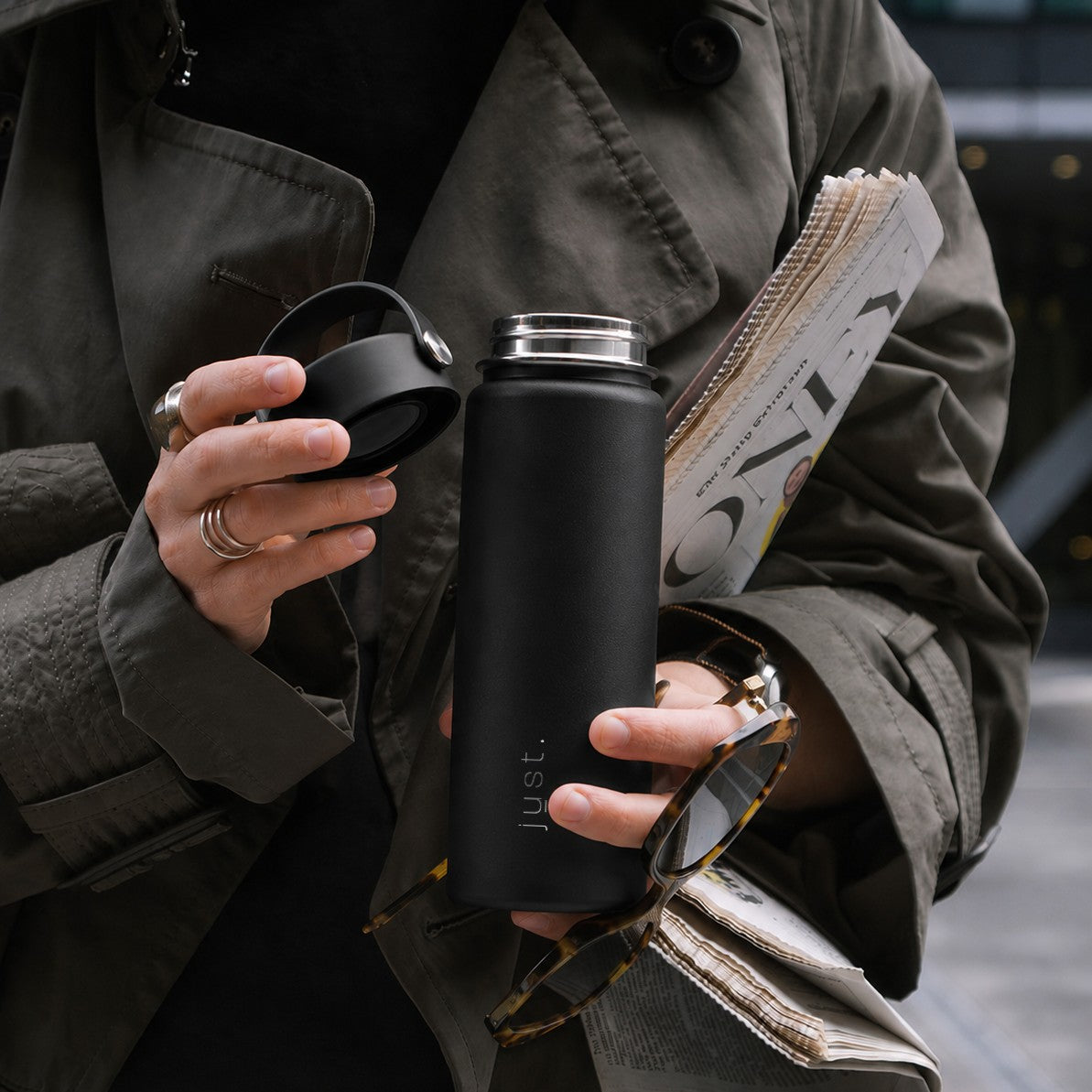
There is a big difference between handing someone a cheap promotional bottle and giving them something they will use every day. In hot weather a glass of water left on a desk is warm and unappealing within an hour; an insulated stainless steel bottle keeps water cold through the working day and travels between desk, meeting room and commute. For employers, reusable bottles are a practical part of a hydration initiative and a genuinely useful piece of company merchandise at the same time.
| Team profile | Bottle | Why it works |
|---|---|---|
| Office and hybrid staff, commuting | Nomad Bottle 550 or 750 ml | Cold for 24 hours, leakproof, fits a bag |
| Desk-based, forgets to drink | Titan Tumbler 1.2 L | Straw lid for constant sipping, carry handle, one refill a day |
| Prefers glass, permanent desk | Zen Glass Bottle 500 ml | Neutral taste, visible water level as a prompt |
| Warehouse, outdoor, site teams | Nomad 1 L or Clipper with carabiner | Capacity for a hot shift, clips to a belt or bag |
| Field and sales staff in cars | Nomad 750 ml or Titan | Fits cup holders, cold all day |
Add the company branding and the bottle becomes part of the wider company experience as well as a hydration tool; our post on why corporate water bottles fail internally explains the small choices (size, lid, colour, how it is handed out) that decide whether it gets used. For desk-based teams who prefer to sip all day, straw-lid branded tumblers are the usual choice.
3. Make the water itself more appealing
Sometimes access is not the problem; plain room-temperature water is simply not very exciting. You do not need to fill the fridge with sugary drinks to add variety. Offer fresh lemon, lime, cucumber or mint for infused water; chilled and room-temperature options; sparkling alongside still; herbal and caffeine-free teas; and ice in hot weather. Give people a choice of how they drink too: some drink more through a straw, others prefer a wide mouth or a small bottle refilled often. The easier and more enjoyable drinking water feels, the less it becomes another thing to remember. Our post on the science of cold water explains why temperature alone changes how much people drink.
4. Attach hydration to habits people already have
Hydration reminders quickly become background noise in calendars already full of notifications. A better approach connects drinking water with moments that already happen: arrive at work, fill the bottle; make the morning coffee, have some water too; head into a long meeting, take the bottle; return from lunch, refill; pack up, take the bottle home. None of it needs an app, a timer or a company-wide challenge. Managers help by example: when reusable bottles routinely sit on meeting tables and travel around the office, keeping water nearby becomes part of the culture.
5. Treat hot and physical workplaces differently
An office hydration plan will not work for a warehouse, construction site, commercial kitchen or outdoor team. For employees in heat or doing physical work, water availability has to be considered alongside breaks, access to cooler or shaded areas and the exertion involved. In hot weather an active adult can lose 500 ml to 1 litre of fluid an hour.
| Check during hot spells | Office | Warehouse or kitchen | Outdoor or site |
|---|---|---|---|
| Where water is available | Kitchen and dispensers | Points at each zone, not just the canteen | Water on the vehicle or at the work face |
| How often staff can reach it | Any time | Within a few steps without leaving the line | Every break, and carried on the person |
| Can staff keep a bottle with them | Yes | Yes, with a clip or holster | Essential; 1 L insulated minimum |
| Does the water stay cool | Dispenser or insulated bottle | Insulated bottles; chilled dispensers | Insulated bottles; cool boxes |
| Breaks in the hottest hours | Normal | Extra short breaks | Rotate tasks, shade, scheduled drink breaks |
| Electrolytes | Not needed | Consider for long hot shifts | Yes on long hot days |
6. Include remote and hybrid employees
The workplace is now somebody's kitchen table three days a week, so hydration initiatives should not stop at the office door. Reusable drinkware works well in onboarding and welcome kits precisely because it works wherever someone is: beside a home desk on Monday, in the office on Tuesday, at a client meeting on Wednesday. For hybrid teams that is far more practical than anything that only works inside the building.
A quick workplace hydration checklist
- Can employees access fresh drinking water easily, and is it marked?
- Are refill points where people already walk?
- Can employees keep water close to where they work?
- Is chilled water available in hot weather?
- Do outdoor, warehouse and physically active teams have suitable access and breaks?
- Are meeting rooms set up with reusable drinkware or a refill point nearby? (Our post on the meeting room water bottle problem covers this.)
- Have remote and hybrid employees been included?
- Are the bottles you give people genuinely practical for daily use?
You do not need an elaborate programme. Removing a few everyday barriers is usually enough.
Make hydration easier to fit into the working day
Workplace hydration will not disappear from the conversation when the temperature drops. Busy schedules, long meetings, commuting and physical work make it easy to forget water at any time of year. Accessible refill points, cold water and quality reusable bottles give employees fewer reasons to put off the next drink, and when those are built into the workplace itself, staying hydrated fits around everything else. Just Bottle makes custom branded water bottles and drinkware for businesses: insulated stainless steel bottles, tumblers and glass bottles, personalised in-house, from 25 units with all-in delivered pricing. Every 100 bottles ordered also funds the collection of 10 kg of ocean-bound plastic through Plastic Bank, roughly 500 plastic bottles kept out of the sea.
Frequently asked questions
Do employers have to provide drinking water in the UK?
Yes. The Workplace (Health, Safety and Welfare) Regulations 1992 require an adequate supply of wholesome drinking water, readily accessible, marked where necessary, with cups or a fountain. HSE guidance on working in heat adds that water should be easy to reach and breaks should allow time to drink.
How can I encourage employees to drink more water?
Put refill points where people already walk, give everyone a quality insulated bottle, keep the water cold and offer variety such as sparkling or fruit, tie drinking to existing routines like arriving and meetings, and lead by example with bottles on meeting tables.
Should a company give employees water bottles?
Yes. It is one of the cheapest wellbeing measures, it removes disposable bottles, and a quality branded bottle is used daily on desks, in meetings and on commutes for years. Include it in the welcome kit so every starter has one.
How much water should employees drink at work?
About 1.5 to 2 litres of fluid across a typical office day, more for physical or hot work, where losses can reach 500 ml to 1 litre an hour. A 750 ml bottle refilled two or three times covers most office roles.
What is the best water bottle for employees?
A 550 to 750 ml vacuum-insulated stainless steel bottle with a leakproof lid for most staff; a 1 L or straw-lid tumbler for desk-based people who forget to drink; a 1 L bottle with a clip for warehouse and outdoor teams.
How do you manage hydration for outdoor or warehouse workers in hot weather?
Water at the work face, not only in the canteen; insulated bottles staff carry; scheduled drink breaks in the hottest hours; shade or cooler areas; and electrolytes on long hot shifts. Review the arrangements each time a heat warning is issued.
Equip your team
Explore our custom branded water bottles and the wider drinkware for business range for offices, sites and hybrid teams.