

Choosing a reusable bottle used to be simple. Now there are insulated stainless steel bottles, minimalist glass designs, recycled plastic options, tumblers, straw lids and enough sizes to make the choice feel complicated. So what is a reusable water bottle worth buying in 2026? Most of the answer comes down to material and how you plan to use it.
Glass is brilliant if you care about taste and easy cleaning. Stainless steel is hard to beat for insulation and durability. Recycled plastic is light and practical when portability matters most. The best reusable water bottles are designed around a particular job, so here is how the three materials compare, with the trade-offs laid out plainly.
Short answer: stainless steel for anything that moves (commute, gym, travel, hot or cold drinks all day); glass for a desk or home where taste and a clean, visible interior matter most; recycled plastic (rPET) when weight, cost and quantity matter, such as children, events and teams. If you want one bottle for everything, choose vacuum-insulated stainless steel at 550 to 750 ml. The glass vs stainless steel decision is really a decision about where the bottle lives.
1. Stainless steel: best for keeping drinks cold
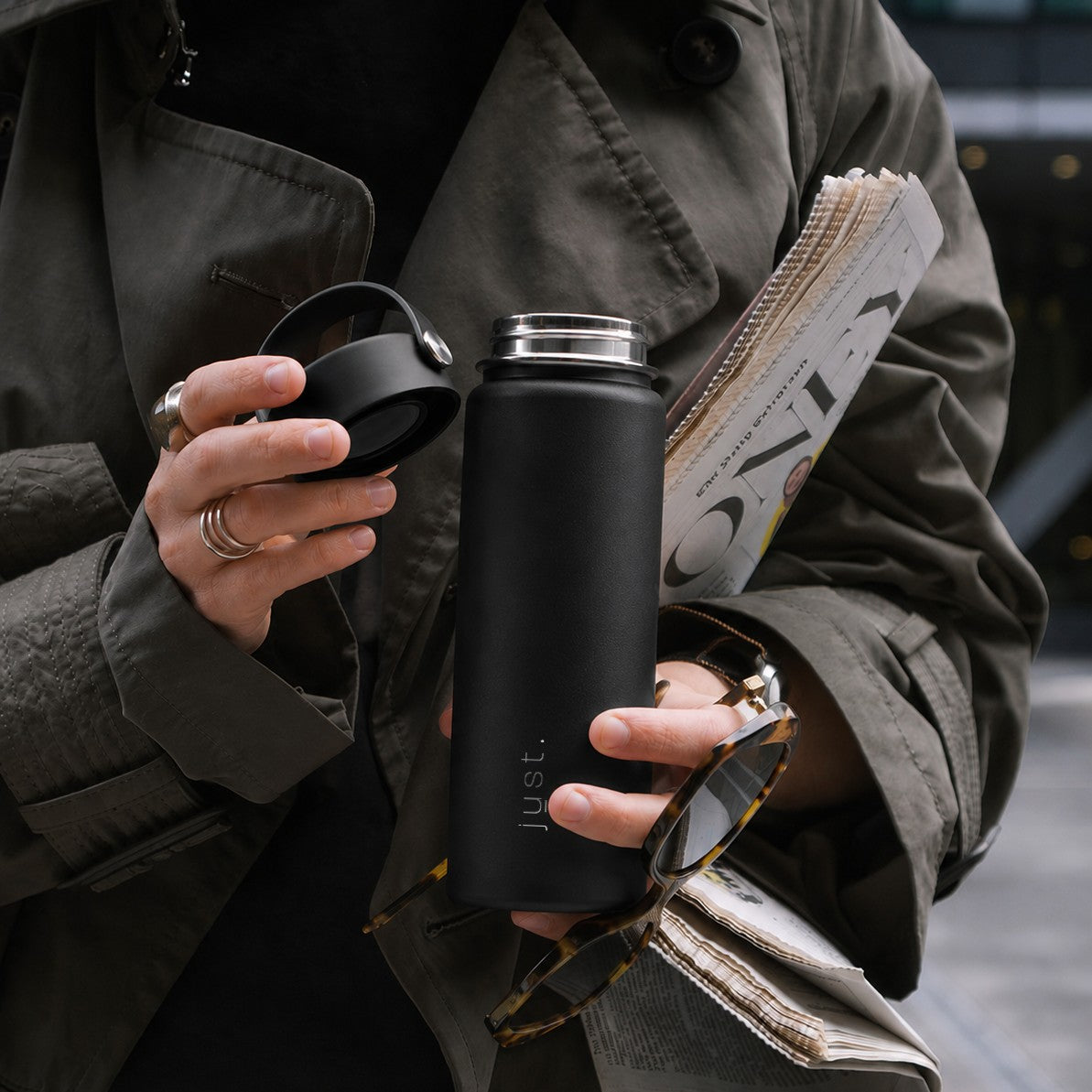
If you leave home in the morning and need water to stay cold until late afternoon, stainless steel has the obvious advantage. Double-wall vacuum insulation holds temperature for hours without the outside sweating with condensation, and the material shrugs off commuting, travel, gym bags and long working days. It does not hold flavours when cleaned, works for hot and cold drinks, and comes in every size and drinking style. The trade-off is weight, especially in larger insulated designs.
Our insulated drinkware uses food-grade 18/8 stainless steel. The Nomad Bottle keeps drinks cold for up to 24 hours or hot for 12 in 550 ml, 750 ml and 1 L; the Titan Tumbler pairs the same insulation with 1.2 L, a carry handle and a flip-up straw; the All Day Tumbler (500 ml) suits people who switch between water, coffee and iced drinks with a leakproof lid for moving between office, commute and meetings. Are stainless steel water bottles better? For temperature and everyday durability, yes. Our post on how vacuum insulation works explains why.
2. Glass: best for a clean, neutral taste
There is a reason so many people prefer drinking from glass. Borosilicate glass holds no flavour, so yesterday's lemon water does not appear in today's drink, and the transparent body shows you exactly when it needs a wash. Our Zen Glass Bottles use borosilicate glass that resists staining and thermal shock, with smooth interiors and removable parts for easy cleaning, in 300, 500 and 900 ml.
Glass works best if you mostly use the bottle at a desk or at home, want a completely neutral taste, like seeing what is inside, add fruit or flavours to water, or want something minimal and easy to clean. The consideration is breakability. Borosilicate is tougher than ordinary glass, but it is still glass, and not the first choice for the bottom of a hiking pack. Is glass better than plastic? For taste, staining and odour, yes. For someone carrying a bottle all day, weight and durability may matter more, which is why the better material depends on where you take it. Our post on why some water bottles taste better than others covers the taste side in detail.
3. Recycled plastic: best when weight matters
Sometimes you simply do not want to carry a heavy bottle. A lightweight reusable bottle makes sense for events, large teams, schools, sport, travel and anywhere portability comes first. Recycled plastic also gives existing plastic another useful life instead of relying on virgin material. Our rPET range (Loop, Go and Roam) is made from 100% recycled PET as a lighter, lower-cost alternative to steel and glass that is still refillable for years.
Consider rPET when you need a light bottle, something easy to carry in quantity, a practical option for events or teams, a lower-cost reusable format, or custom branded bottles for large groups. It will not give the insulation of steel or the drinking feel of glass, but it is not trying to. Its strength is being light, practical and easy to hand out.
4. Compare all three before you choose
| Stainless steel (vacuum insulated) | Borosilicate glass | Recycled plastic (rPET) | |
|---|---|---|---|
| Best for | Everyday use, commuting, gym, travel | Desk, home, taste-sensitive drinkers | Children, events, teams, lightweight carry |
| Weight (empty, 500 to 550 ml) | About 300 to 350 g | About 300 to 400 g | About 60 to 90 g |
| Insulation | Cold 24 h, hot 12 h | None (double-wall glass: a few hours) | None |
| Condensation | None | Yes with cold drinks | Some with cold drinks |
| Durability | Excellent; dents are cosmetic | Handle with care; chips mean replacement | Very good against drops; scratches over time |
| Taste | Neutral when quality steel and clean | Completely neutral | Neutral when new; can hold flavours as it ages |
| Visibility of contents | Opaque | Transparent | Usually translucent |
| Cleaning | Easy with a wide mouth; hand wash insulated bodies | Very easy; dishwasher safe | Easy; top rack, low heat |
| Hot drinks | Yes | Warm yes, boiling with care | No |
| Typical lifespan | 5 to 10+ years | Until it breaks | 2 to 3 years |
| Typical price (550 ml) | £20 to £35 | £15 to £25 | £6 to £12 |
| Environmental note | Durable, fully recyclable, highest footprint to make | Inert, recyclable, heavier to ship | Made from recycled plastic; shortest life |
No material wins every row, which is exactly why it is worth thinking about how you will use the bottle before buying it.
5. Think about the lid as much as the bottle
Material gets the attention, but the lid changes how a bottle feels to use. A wide mouth is handy for ice and cleaning. A straw lid makes frequent sipping easy while working or driving. A carry handle helps on a commute. A secure leakproof lid becomes essential when the bottle shares a bag with a laptop. When comparing bottles, check how you drink (straw, sip lid or wide mouth), where it travels (desk, handbag, backpack or car), how much you drink (will 500 ml do, or would 1 L save constant refills), what you drink (water only, or coffee, tea and iced drinks too), and how you clean it (do the lid, seal and straw come apart). Those details often make a bigger difference than choosing between two bottles of the same material. Our guide to whether big water bottles make you drink more covers size.
6. Match your bottle to your day
| Your day | Material | Our pick | Why |
|---|---|---|---|
| One bottle for commuting, work, travel and weekends | Stainless steel | Nomad 750 ml | Cold all day, fits a bag, two refills |
| Desk-based, forgets to drink | Stainless steel | Titan Tumbler 1.2 L | Straw lid, handle, one refill |
| Home office or permanent desk, taste matters | Glass | Zen 500 ml | Neutral taste, visible, minimal |
| Switching between water, coffee and iced drinks | Stainless steel | All Day Tumbler 500 ml | Insulated, leakproof, hot and cold |
| Children, school, sport | rPET | Loop 500 ml 2-pack | Light, inexpensive, survives drops |
| Supplying a team or event | rPET or steel | Branded rPET Go or Nomad 550 ml | Cost and weight, or premium and kept |
If you want one bottle that handles commuting, travel and long days, stainless steel is the strongest all-rounder. For a home office or permanent desk, glass comes into its own. If portability tops the list, or you are supplying a large group, rPET keeps things light. The right choice comes down to what happens after you fill it: where you are going, how long you will be out, and what you enjoy drinking from. Whatever you choose, every 100 bottles ordered from Just Bottle funds the collection of 10 kg of ocean-bound plastic through Plastic Bank, roughly 500 plastic bottles kept out of the sea. For a pick by personality rather than material, see the best water bottle for every type of person.
Frequently asked questions
Glass or stainless steel water bottle: which is better?
Stainless steel for anything that travels: it is insulated, unbreakable in normal use and holds no flavour when clean. Glass for a desk or home where taste and seeing the contents matter and the bottle stays put. Many people own one of each.
Is a stainless steel water bottle better than plastic?
For durability, insulation and taste over time, yes. Plastic wins on weight and price, which is why it suits children, events and large groups. Quality rPET lasts two to three years of daily use; steel lasts five to ten or more.
What is the best material for a water bottle?
There is no single best. Vacuum-insulated stainless steel is the best all-rounder, borosilicate glass is best for taste, and recycled plastic is best for weight and cost. Choose by where the bottle will spend most of its time.
Are glass water bottles safe to carry around?
Borosilicate glass in a protective sleeve is fine for a handbag, car or desk commute. It is not the right choice for hiking, sport or a bag that gets dropped. If it chips or cracks, stop using it.
Do stainless steel bottles make water taste metallic?
Not when they are made from quality food-grade 18/8 steel with no interior coating and washed before first use. A persistent metallic taste points to low-grade steel, a worn liner or a scratched interior.
Which bottle material is most environmentally friendly?
The one you keep using longest. Steel has the highest footprint to make but lasts a decade; rPET has the lowest footprint and is made from recycled material but lasts two to three years; glass is inert and recyclable but heavy to ship. Any of them beats a single-use bottle within weeks.
Find your material
Explore our full reusable water bottle collection in stainless steel, glass and recycled plastic, and find the size and drinking style that fits your day.