

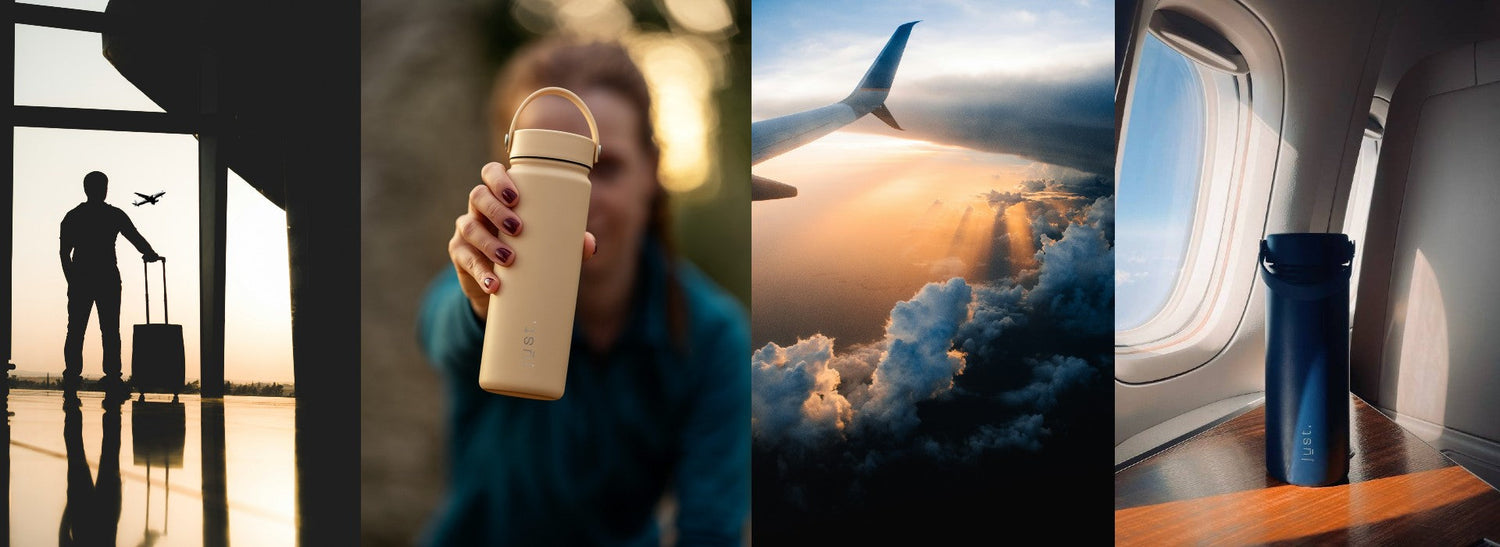
Yes, you can bring a water bottle on a plane. An empty bottle of any size and any material can go through airport security anywhere in the world. A full bottle is a different matter: at most airports the liquid limit at security is 100 ml (3.4 oz) per container, so empty it before the checkpoint and refill it on the other side.
Our founders have a background in aviation, so we asked them what travellers get wrong most often. This guide covers the current rules for the US, UK, EU, Canada and Australia, checked against official sources in November 2026.
Water bottle rules at a glance
| Where you fly from | Liquid limit at security | Full water bottle? | Empty bottle? | Good to know |
|---|---|---|---|---|
| United States | 3.4 oz (100 ml) per container, in one quart size bag (the TSA 3-1-1 rule) | No | Yes | The same rule applies to domestic and international flights |
| United Kingdom | 100 ml at most airports. Some airports allow containers of up to 2 litres | Only at airports that allow 2 litres | Yes | GOV.UK says frozen liquids are not allowed in hand luggage |
| European Union | 100 ml per container, in one transparent bag of up to 1 litre | Only at airports with new scanners that have raised the limit | Yes | Rules can differ between airports and even between terminals |
| Canada | 100 ml per container, in one clear bag of up to 1 litre | No | Yes | Water in a personal bottle must be drunk or poured away before the checkpoint |
| Australia | 100 ml per container on international flights. No limit on domestic flights | On domestic flights only | Yes | Many international flights have a second liquids check at the gate |
Sources: the Transportation Security Administration (TSA), GOV.UK, the European Commission, the Canadian Air Transport Security Authority (CATSA) and Brisbane Airport. Airports change their rules as new scanners arrive, so check your departure airport before you travel.
Why are there liquid rules at all?
The 100 ml limit was introduced in 2006 after a plot to use liquid explosives on aircraft was uncovered. Security staff are concerned about the liquid, not the bottle, which is why an empty bottle is never a problem.
The limit is slowly being relaxed because of a new generation of CT scanners, which build a three dimensional image of a bag and can tell harmless liquids from dangerous ones. Airports that have installed them can allow larger containers, which is why the rules now vary so much from one airport to the next.
United States: the TSA 3-1-1 rule
The TSA allows each passenger to carry liquids in containers of 3.4 ounces (100 millilitres) or less, all inside one quart size bag. That is the 3-1-1 rule, and it applies to every flight leaving a US airport, domestic or international. A bottle with water in it will not get through, however little is left, because the limit applies to the size of the container.
Two things are worth knowing:
- Frozen water. TSA guidance allows frozen items through the checkpoint if they are frozen solid when screened. If the ice is slushy or partly melted, it counts as a liquid.
- A possible change. In September 2026, CBS News reported that the TSA was considering letting PreCheck travellers carry full water bottles through security at selected airports. At the time of writing nothing has been confirmed, so plan on the normal rule.
United Kingdom: 100 ml at most airports, 2 litres at some
GOV.UK says that at most airports you cannot take liquids in containers larger than 100 ml through security, and that this still applies if the container is only part full. Some airports with new scanners now allow containers of up to 2 litres. In January 2026, Which? reported that Heathrow, Gatwick, Edinburgh, Birmingham, Bristol and both Belfast airports had made the switch.
If you carry an insulated bottle, take note: Which? also reports that liquid in a vacuum flask must be poured out, because the scanners cannot see through the double wall. And unlike in the US, GOV.UK says you cannot carry frozen liquids in hand luggage.
European Union: 100 ml unless your airport says otherwise
The European Commission's rule for hand luggage is liquids in containers of no more than 100 ml, carried in one transparent, resealable bag of up to 1 litre. A growing number of European airports have installed scanners that allow larger containers, in some cases up to 2 litres, but it varies by airport and sometimes by checkpoint.
The list is growing. In October 2026 the travel site Your Mileage May Vary reported that airports accepting containers of up to 2 litres included Rome Fiumicino, Milan Linate, Bologna, Dublin, Vilnius and Billund. It also noted that Frankfurt advises passengers to prepare for the 100 ml limit, because only some of its scanners accept more, and that at Milan Malpensa and Prague the higher limit applies in one terminal only.
Assume the 100 ml rule applies unless your airport tells you otherwise.
Canada: 100 ml, and empty your bottle first
The Canadian Air Transport Security Authority (CATSA) limits liquids in hand luggage to containers of 100 ml (3.4 oz) or less, all inside one clear, resealable bag of no more than 1 litre. It says drinks in larger containers, including water in a personal water bottle, must be drunk or poured away before the checkpoint, and that you can refill the bottle once you are through.
Freezing your water will not help here. CATSA says items that are normally liquid are still treated as liquid when frozen, so they are not allowed through in containers over 100 ml.
Australia: full bottles on domestic flights, 100 ml on international
Australia is one of the places where the rules depend on your route. Brisbane Airport's guidance says domestic flights are not subject to restrictions on how much liquid you can carry on board, so you can take a full water bottle through security.
International flights are different. Liquids must be in containers of up to 100 ml, carried in a resealable transparent bag, and many flights to and from Australia have a further check at the gate (more on that below).
Can you take an empty water bottle through airport security?
Yes, everywhere. The material does not matter: stainless steel, glass, aluminium and plastic are all treated the same. Take the lid off or be ready to show it is empty if asked.
If you are flying with glass, pack it carefully. For most trips an insulated stainless steel bottle is the easier choice because it will not break in a bag and it keeps water cold for the whole flight.
Hand luggage or checked bag?
The liquid rules only apply to what you carry through security. In a checked bag you can pack a bottle full or empty. Tighten the lid properly, because bags are thrown around during loading, and consider putting the bottle in a sealed bag in case of leaks.
Domestic or international flight?
In the US, UK, EU and Canada the same security rules apply whether your flight is domestic or international. Some countries are more relaxed on domestic routes. Australia, for example, has no liquid limit on domestic flights. If you are not sure, check with your departure airport.
Two more things to watch:
- Connections and return flights. Your first airport might allow a full 2 litre bottle while your connecting airport or your airport home does not. GOV.UK advises checking the rules for every airport on your journey.
- Extra checks at the gate. Some international routes, including many flights to Australia, have a second liquids check at the departure gate. On those flights a bottle filled after security can still be taken from you, so ask the gate staff before you fill up.
Exceptions: baby milk and medicines
Baby formula, breast milk and essential liquid medicines are allowed in larger amounts. In the US, the TSA allows formula, breast milk and medically necessary liquids over 3.4 oz and asks you to take them out of your bag for separate screening. In the UK, GOV.UK says containers of up to 2 litres are allowed at all airports for essential medical purposes, special dietary needs and baby food or baby milk. In Canada, CATSA allows baby food, milk, formula, water and juice over 100 ml when you are travelling with a child under two. Tell the security officer before your bag goes through the scanner.
Refilling your bottle after security
Most airports have water fountains or refill stations after security, usually near the toilets or the food outlets. Fill your bottle there and take it on board. If you run out during the flight, ask the cabin crew: they can usually top it up with drinking water.
You will save money, because bottled water at the airport is expensive, and you will avoid buying single use plastic.
Choosing a bottle for travel
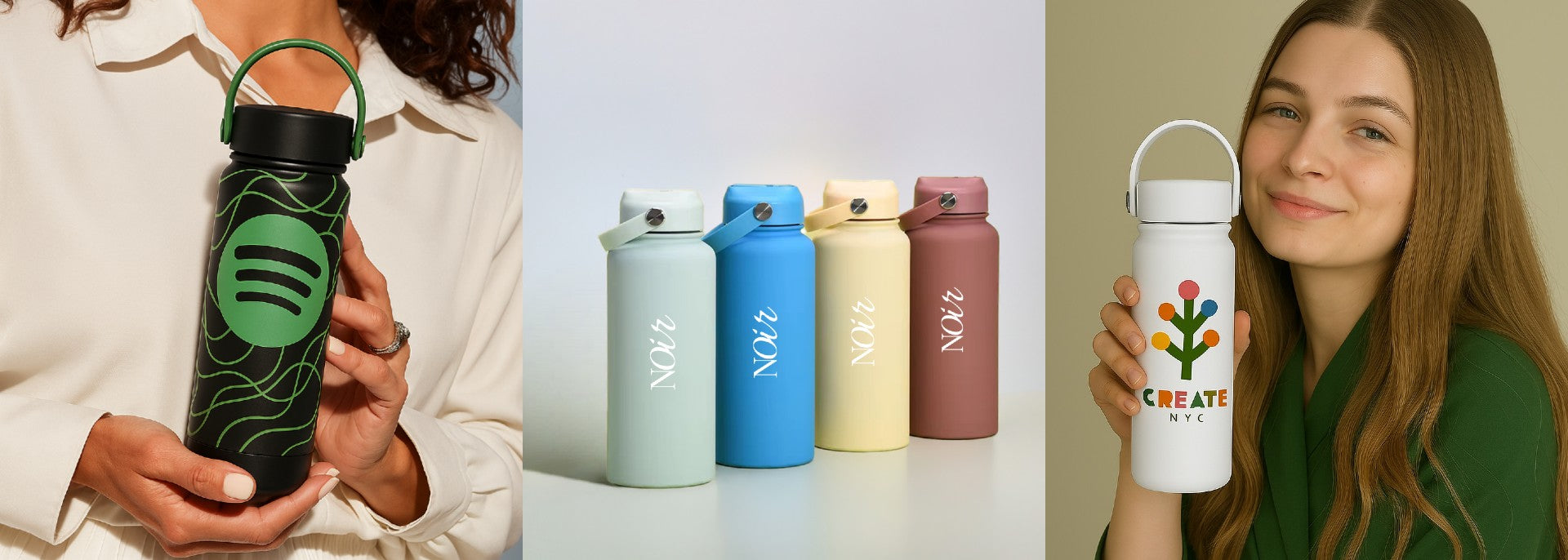
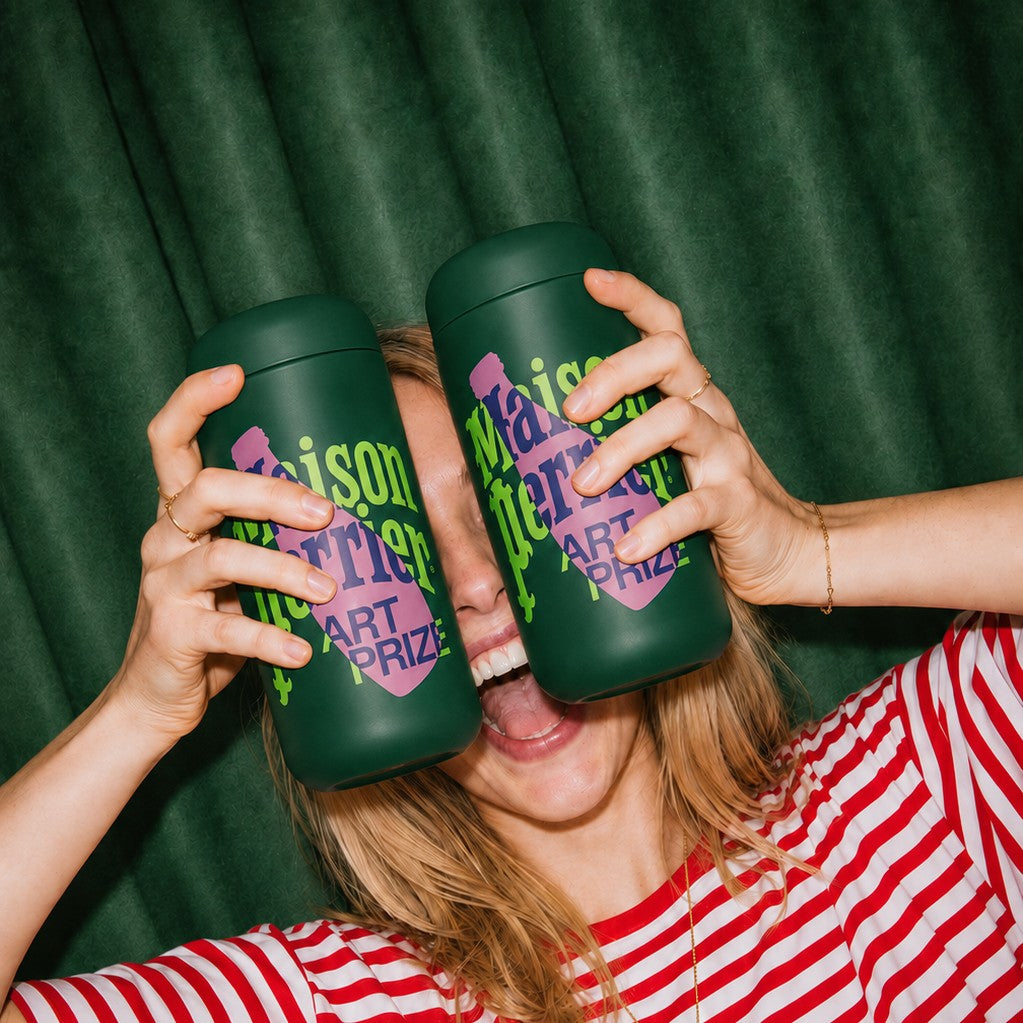
Look for a bottle that is light, tough and leakproof. Double wall vacuum insulation is worth having on a long flight, because your water stays cold from the gate to the arrivals hall. A lid that seals properly matters most of all, since the bottle will spend hours on its side in a bag.
Our insulated stainless steel water bottles are built for exactly this, and if you want a different way to drink on the move there are straw, sip and handle lids among our spare lids and accessories. For more help choosing, see our guide to the best reusable water bottle for travel.
Staying hydrated on a long flight
- Drink plenty of water before you board and sip regularly during the flight.
- Go easy on alcohol and caffeine. Cabin air is very dry and both can leave you feeling worse.
- Add electrolytes to your water on long haul flights.
- Pack a small moisturiser and lip balm.
- Get up and stretch every hour or two.
- Give your bottle a proper wash when you arrive. Our guide on how to clean a water bottle shows you how.
Frequently asked questions
Can you bring a water bottle on a plane?
Yes. An empty water bottle can go through security at any airport, and you can refill it before you board. A full bottle is only allowed at airports that have raised the liquid limit above 100 ml (3.4 oz).
Can you bring a metal or stainless steel water bottle on a plane?
Yes. Security rules are about the liquid, not the bottle, so metal, insulated, glass and plastic bottles are all allowed when empty.
Can I take a full water bottle through security?
Not in the US, where the TSA limit is 3.4 oz (100 ml) per container. In the UK and EU it depends on the airport: some now allow containers of up to 2 litres, most still apply the 100 ml limit.
Can you bring frozen water through airport security?
In the US, TSA guidance allows it if the water is frozen solid at screening. In the UK, GOV.UK says frozen liquids are not allowed in hand luggage.
Can I pack a full water bottle in checked luggage?
Yes. There is no liquid limit for water in checked bags. Make sure the lid is tight.
Can you bring baby formula on a plane?
Yes. Formula, breast milk and baby food are allowed in amounts over 100 ml. Tell security staff before screening, and expect the containers to be checked separately.
Can you take a full water bottle on a domestic flight in Australia?
Yes. Australian domestic flights have no limit on the amount of liquid you can carry on board. The 100 ml limit applies to international flights.