

Starting a new job is exciting, and a little daunting. You are trying to remember everyone's name, find the coffee machine, learn new systems and avoid asking the same question twice. Even confident people feel out of their depth in the first few days. For employers that is an opportunity. You invested time finding the right person; now you get to show them they made the right decision too. That is what a thoughtful employee welcome kit (or welcome pack, as most UK teams call it) is for.
The best welcome kits are not the ones packed with the most branded merchandise. They are the ones filled with useful, well-made items that make the first week easier and keep being useful long after the onboarding presentations end. Think about the last welcome pack you received. You probably do not remember every item, but you likely still own the bottle, the notebook or the coffee cup. The things that become part of a routine are the things people remember. In 2026, with hybrid teams and remote starters, the welcome kit has become an extension of company culture: the first physical proof that the business planned for someone's arrival.
Short answer: a good employee welcome kit has three layers: the practical essentials for week one (welcome guide, IT setup, pass, key contacts), one or two quality items the person will still use in a year (a branded insulated water bottle and a reusable coffee cup are the most-kept), and a personal touch (a handwritten note, a first-day lunch). Keep it to five to eight items, send it before day one for remote starters, and apply one test to everything: will they still be using this in six months?
Start with the essentials people actually need
Before thinking about merchandise, focus on what helps someone settle in. A welcome kit should remove uncertainty, not add to it. New starters should not spend their first morning wondering where to find information or who to ask. The practical layer usually includes a welcome guide for the first week, a quality notebook and pen, laptop and IT setup instructions, a security pass or access card, a team directory and key contacts, an office map or remote-working guide, and information about benefits. These are not the most exciting items in the box, but they are the first things someone reaches for, and a well-organised kit tells a new employee something important before their first meeting: we planned for you.
Include something they will still be using next year
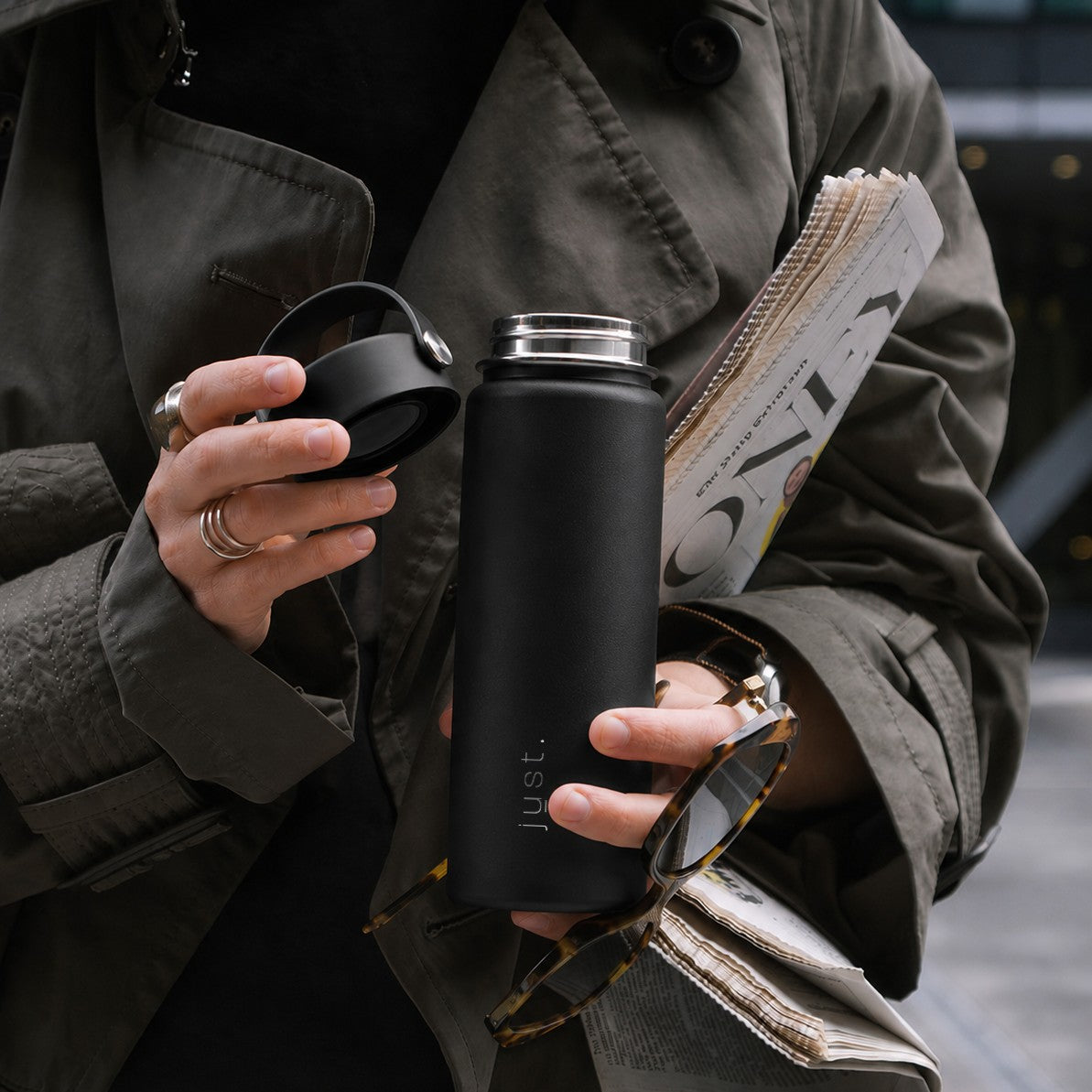
Every company has bought promotional products that looked great on paper: the keyring, the stress ball, the USB stick still sealed in a drawer. The problem is not that they are bad. They simply never become part of anyone's day. Reusable drinkware is different. Whether someone works from home, commutes or travels between client meetings, they drink water or coffee all day, every day. That is why a quality bottle or reusable coffee cup consistently outperforms novelty merchandise in what people keep.
| Team profile | Drinkware that fits | Why |
|---|---|---|
| Office-based, commuting daily | 550 ml Nomad Bottle | Fits a bag and a desk; cold all day |
| Desk-based, hates refilling | 1 L Nomad Bottle | One refill a day; large enough to be a visible reminder |
| Hybrid, long days, iced-drink culture | Titan Tumbler | 1.2 L with straw lid and handle; one-handed sipping |
| Coffee first thing, short commute | Brew Cup | 350 ml insulated, barista fill lines, leakproof; replaces the daily paper cup |
| Long commute, drives or trains | Commuter Cup | Hot for up to 8 hours, fits cup holders |
| Remote team, posted kits | 550 ml Nomad plus Brew Cup | Both survive a courier; both used from the kitchen table |
Because these products are genuinely useful they become part of a routine. Instead of sitting in a drawer they are on desks, in meeting rooms, in cars and travelling between home and work. Our post on why corporate water bottles fail internally covers how to pick one that gets used rather than filed, and best gifts for office staff ranks the alternatives.
Let your company culture shine through
Culture is not learned from a slide deck. It is built through small experiences, and the welcome kit is one of the first chances to show what the business stands for beyond the job description. Include your values, mission and purpose, charity partnerships, sustainability initiatives, wellbeing programmes and learning opportunities. If sustainability is part of the business, show it rather than mention it. Every Just Bottle bottle and cup helps fund the collection of ocean-bound plastic (every 100 units funds 10 kg through Plastic Bank, roughly 500 plastic bottles), which is a simple way to demonstrate that the commitment on the website is reflected in the product in the new starter's hand. Purpose feels more authentic when people can see it.
Add a personal touch
The smallest gestures often leave the biggest impression, and they cost little. A handwritten card from their manager. A message signed by the team. A voucher for lunch on the first day. Their favourite snacks on the desk. A notebook with their name inside. These show that someone thought about the person joining, not just the role being filled. Starting a new job is a milestone; a little warmth goes a long way.
Think further than the first morning
A common mistake is treating onboarding as a single event. It lasts weeks, sometimes months, and the best welcome kits keep adding value through that period. The notebook fills up during training. The bottle sits beside someone through meetings. The coffee cup becomes part of the commute. These are tools that quietly become part of working life rather than props for a welcome presentation. Before adding anything to the kit, ask one question: will this person still be using it six months from now? If yes, include it.
Create the same experience for everyone
Hybrid working has changed onboarding. Some employees arrive at a busy office; others start at their kitchen table with a courier delivery and a video call. That difference should not change how welcomed they feel. Many businesses now post welcome kits to remote starters before their official start date so everyone begins with the same experience. Someone joining from London, Leeds or Lisbon should feel equally valued from the moment they join. Practically, that means choosing items that ship well (drinkware does; plants and food do not), ordering a few spares, and holding kits in stock so a start date is never missed; our guide to corporate drinkware lead times explains how far ahead to order.
Quality beats quantity
There is a temptation to fill the box with as many branded items as possible. People would almost always rather have three excellent products than ten average ones. The test is simple: would I use this myself? If not, your employees probably will not either. Focus on lasting value: a premium reusable bottle, an insulated coffee cup, good stationery, a useful tech accessory. These stay in circulation for years, and they represent the brand better. Every time an employee reaches for their bottle in a meeting they are holding something that reflects the quality of the business.
The welcome kit checklist
| Layer | Item | Purpose | Still used in 6 months? |
|---|---|---|---|
| Essentials | Welcome letter from the team and manager | Warmth, first-day plan | Kept, not used |
| Essentials | First-week guide, key contacts, office or remote map | Removes uncertainty | Week one |
| Essentials | Laptop, pass and IT setup instructions | Day-one productivity | Ongoing |
| Essentials | Quality notebook and pen | Training notes | Yes |
| Keep-forever | Branded insulated water bottle | Daily hydration, visible brand | Yes, for years |
| Keep-forever | Reusable coffee cup | Replaces the daily paper cup | Yes, for years |
| Personal | Lunch voucher or favourite snacks | Day-one gesture | Day one |
| Culture | Values, benefits, wellbeing and sustainability information | Shows what the company stands for | Referenced |
Notice what is missing: no clutter, nothing included to make the box look fuller. Just practical, thoughtful items that help someone feel prepared and appreciated.
Budget and ordering notes
Most companies land between £40 and £120 per kit depending on the drinkware chosen; the bottle and cup are typically half of that and are the only items still in use a year later. Branded drinkware is usually ordered in quantities of 25 to 50 with the logo laser engraved or printed in-house, with mock-ups approved before production and all-in delivered pricing so there are no surprises. Order for the next six months of expected hires plus 10% so a surprise start never goes without a kit, and keep the box design consistent so the hundredth hire gets the same experience as the first.
A great first impression lasts longer than the first day
People do not remember every onboarding presentation or every document they signed. They remember how welcomed they felt. A carefully planned welcome kit shows new starters the business invested in their experience from the beginning. It helps them settle faster, reinforces culture and gives them things they will use long after their first week. The most successful kits are not the biggest or most expensive. They are the ones that make everyday working life a little better.
Frequently asked questions
What should be in an employee welcome kit?
Three layers: week-one essentials (welcome letter, first-week guide, contacts, IT setup, notebook and pen), one or two items they will use for years (an insulated water bottle and a reusable coffee cup are the most kept), and a personal touch such as a handwritten card or a first-day lunch. Five to eight items is plenty.
How much should a new employee welcome pack cost?
Typically £40 to £120 per person. Spend it on two or three quality items rather than ten cheap ones; the drinkware is the part still in use a year later and carries the brand every day.
What is the best branded gift for new employees?
An insulated stainless steel water bottle, followed by a reusable coffee cup. Both are used daily by almost everyone regardless of role or location, survive being posted, and keep the logo visible on desks and in meetings for years.
Should remote employees get a welcome kit?
Yes, and it matters more for them. Post it to arrive before the start date so the first video call begins with the same experience an office starter gets. Choose items that ship well and avoid perishables.
How far in advance should I order welcome kits?
Branded drinkware takes around 5 weeks standard or 2 weeks express from mock-up approval, so order for the next six months of expected hires plus a 10% buffer and hold stock. Reordering in planned batches also qualifies for slower, cheaper delivery pricing.
What should you not put in a welcome kit?
Anything that fails the six-month test: stress balls, novelty keyrings, cheap USB sticks, low-quality pens, and perishable food for posted kits. If you would not use it yourself, leave it out.
Building welcome kits for your team?
Explore our custom branded water bottles and custom logo coffee cups and mugs, engraved or printed in-house with your logo, from 25 units with all-in delivered pricing. You can also browse our full range of custom logo drinkware for business. They are the onboarding gifts people are still reaching for long after they stop being the newcomer.