

Walk into almost any meeting room after a busy morning and you see the same thing. Half-finished plastic bottles on the table. Unopened bottles left behind because everyone grabbed one just in case. Recycling bins overflowing before lunch. Another case of bottled water arriving next week because supplies are already low. It has become such a normal part of office life that most businesses barely notice it.
The reality is that disposable bottled water adds unnecessary cost, creates admin, and produces an experience that feels increasingly dated. As workplaces invest in wellbeing, sustainability and brand, many are rethinking something surprisingly simple: how they provide drinking water. The smartest are not removing convenience. They are improving it, and office water bottles are the centre of the fix.
Short answer: a 100-person office running on disposable bottled water typically spends £6,000 to £15,000 a year and throws away 20,000 to 40,000 bottles. Replacing it with filtered refill points, a branded insulated office water bottle for every employee, and glass carafes or premium reusable bottles in meeting rooms costs less within the first year, removes the restocking admin, looks better to visitors, and gives the brand a daily presence on every desk. The bottle spec that works: 550 ml to 1 L, leakproof, vacuum insulated, wide mouth, engraved logo.
The hidden cost of disposable meeting room bottles
Buying bottled water feels like the easiest solution: cases arrive, they go in meeting rooms, guests help themselves. The problem is everything that happens afterwards. Every meeting creates waste even when attendees barely drink. Facilities teams spend time restocking rooms, ordering cases and clearing bottles opened for a single sip. Over a year those small costs become much larger than expected.
| Office of 100 people | Disposable bottled water | Refill points plus reusable bottles |
|---|---|---|
| Bottles consumed or opened per year | 20,000 to 40,000 (1 to 2 per person per working day, plus meetings) | 0 |
| Annual water spend | £6,000 to £15,000 at 30p to 40p per bottle delivered | £1,500 to £3,000 for filtered dispenser rental and filters |
| One-off cost | None | £2,000 to £3,000 for 100 branded insulated bottles; £300 to £600 for carafes and visitor bottles |
| Admin time | Ordering, receiving, storing, restocking, clearing: typically 2 to 4 hours a week | Filter change every 6 months |
| Storage | Pallet space for cases | None |
| Waste | Up to a tonne of plastic a year including caps and film | Negligible |
| Year-one total | £6,000 to £15,000 | £3,800 to £6,600 |
| Year-two total | £6,000 to £15,000 | £1,500 to £3,000 |
Figures are indicative UK ranges; your own numbers come from one month of delivery invoices and a count of what goes in the recycling. Disposable bottles also create visual clutter. Offices invest heavily in furniture, lighting and presentation spaces, yet rows of single-use plastic make even a well-designed meeting room feel dated. Most organisations keep buying bottled water simply because it is how things have always been done; few stop to calculate the real cost.
Employees already expect a different experience
Workplaces have changed. Offices offer specialty coffee machines, wellness programmes, flexible spaces and healthier environments, and hydration has become part of that conversation. Many employees already bring their own reusable bottle; others look for refill points. Disposable bottles feel out of place next to the rest of a modern workplace. Visitors notice too. A chilled refill station, premium reusable drinkware and thoughtful presentation create a more polished impression than a disposable bottle that will be thrown away before the guest leaves. Small details communicate a lot about how a business operates.
Five smarter ways businesses are solving the problem
1. Replace bottled deliveries with refill points
Filtered water dispensers, plumbed in where possible, provide unlimited chilled and ambient water without ordering or storing cases. They are easier to manage and produce almost no waste. One dispenser per 30 to 50 people, placed near kitchens and meeting rooms, is the usual ratio.
2. Give every employee an office water bottle
A quality office water bottle for each team member removes the need for disposables and encourages better hydration through the day. Many businesses now include branded bottles in employee welcome kits, wellbeing programmes or annual gifts. Unlike cheap promotional products that vanish into drawers, a premium reusable bottle gets used every day, as our post on why premium branded bottles get kept explains.
3. Upgrade the meeting rooms
Instead of disposable bottles on the table, businesses now use glass carafes of chilled filtered water with glasses, premium reusable bottles for visitors (which double as a gift), refillable bottles for internal meetings, and a refill point within a few steps of the room. The result is cleaner, more professional and far more aligned with the rest of the office.
4. Choose bottles people actually want to keep
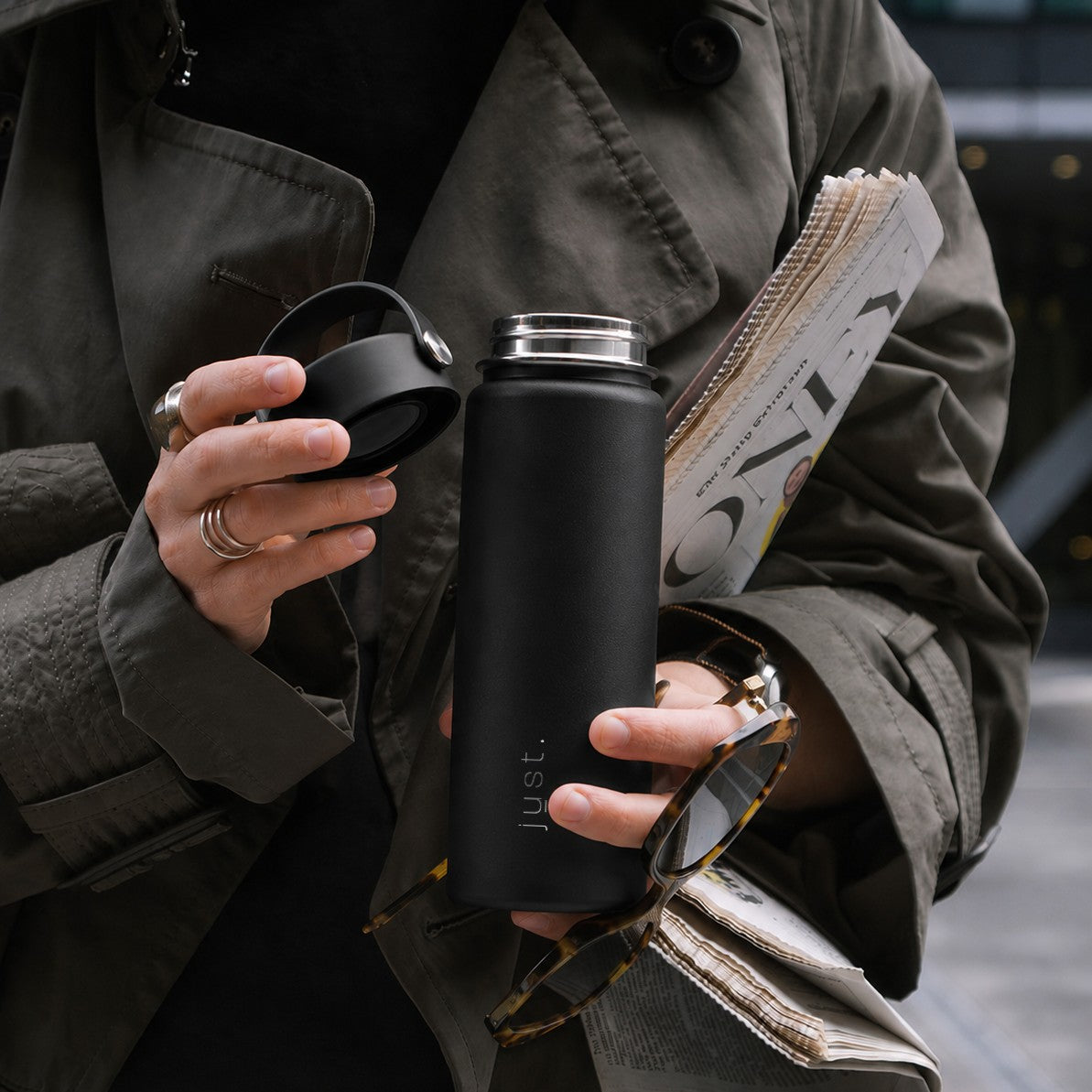
Quality matters. If a bottle leaks, scratches or feels cheap, employees stop using it within weeks. Look for double-wall insulation, a leakproof lid, durable stainless steel, a comfortable handle and a practical everyday size. A well-designed bottle becomes part of the daily routine whether someone is at headquarters, commuting or travelling between meetings. Our post on why corporate water bottles fail internally covers the mistakes that stop even a good bottle being adopted.
5. Make the branding useful
The best branded merchandise is not kept in a cupboard; it is used every day. A premium reusable bottle carrying the company logo travels between offices, conferences, client meetings and commutes, reinforcing the brand while giving employees something useful. With our custom branding range, businesses can personalise stainless steel bottles, tumblers, glass bottles and coffee cups with laser engraving or durable print designed to last.
What makes a good water bottle for office use?
Not every reusable bottle suits the workplace. The best combine practicality with professional design.
| Feature | Why it matters at work | Spec to ask for |
|---|---|---|
| Leakproof lid | Goes in bags with laptops; sits on desks beside keyboards | Screw lid with silicone seal, tested leakproof when closed |
| Vacuum insulation | Cold water at 4 pm gets drunk; warm water does not | Double-wall stainless steel, cold 24 hours, hot 12 |
| Size | Too big is left at home; too small means constant refills | 550 ml for commuters, 750 ml to 1 L for desk-based staff |
| Finish | Scratched bottles look cheap in meetings | Powder coat or brushed steel |
| Wide mouth | Easy to clean in an office kitchen; takes ice | At least 40 mm opening |
| Branding | Faded logos undermine the brand | Laser engraving, or a durable raised print |
| Quiet lid | Open meetings and calls | Screw or flip lid without a loud snap |
The Nomad Bottle is the most popular choice for everyday office use: TempControl insulation, a leakproof lid and a comfortable carry handle, in 550 ml, 750 ml and 1 L. For teams that live on iced drinks, the Titan Tumbler with its straw lid is the desk favourite. Businesses can order it from our range of custom tumblers with their logo. Our custom logo bottle collection covers multiple styles, colours and branding finishes for onboarding, conferences, client gifting and workplace hydration.
How to make the switch in a month
- Week 1: measure. Pull one month of bottled-water invoices and count a week of bottles in the recycling. That is your baseline.
- Week 1: order refill points. One filtered dispenser per 30 to 50 people, near kitchens and meeting rooms.
- Week 2: order bottles. One branded insulated bottle per employee plus 10% spares, and a set of premium bottles or carafes for meeting rooms. Allow 2 to 5 weeks for branding; our guide to corporate drinkware lead times explains the options.
- Week 3: stop the delivery. Cancel the standing bottled-water order to end the week the bottles arrive.
- Week 4: launch. Hand out bottles with a short note about the change and the saving. Put carafes in meeting rooms the same day the last case is used.
- Month 3: report. Compare spend, waste and admin time with the baseline and share the result internally; it is one of the easiest sustainability wins to show.
Better office water starts with better habits
Changing office water supplies does not need a workplace redesign. It starts with one decision: replace disposable bottles with refillable ones. Give employees something they enjoy using, make meeting rooms feel considered, reduce the deliveries arriving each month, and create a workplace that reflects the values the business already talks about. It supports wellbeing, cuts waste, strengthens the brand and usually lowers long-term cost at the same time. The bottles on the meeting room table seem a small detail, but they are one of the first things employees, clients and visitors interact with every day. Every 100 bottles ordered from Just Bottle also funds the collection of 10 kg of ocean-bound plastic through Plastic Bank, roughly 500 plastic bottles kept out of the sea, which makes a neat line in the sustainability report.
Frequently asked questions
What is the best water bottle for the office?
A 550 ml to 1 L vacuum-insulated stainless steel bottle with a leakproof screw lid, wide mouth and engraved logo. It keeps water cold all day, survives a laptop bag, cleans easily in a kitchen sink and looks professional in meetings. Straw-lid tumblers suit desk-based teams who prefer constant sipping.
How much does bottled water cost an office?
Typically £60 to £150 per employee per year once delivery, storage and the bottles opened for a single sip in meetings are included, so £6,000 to £15,000 for a 100-person office. Refill points plus a reusable bottle each usually cost less in the first year and a fraction of that afterwards.
What should replace bottled water in meeting rooms?
Glass carafes of chilled filtered water with glasses for internal meetings, and premium reusable bottles for visitors that they can keep. Both look better than plastic and remove the restocking job.
Should companies give employees water bottles?
Yes. It is one of the cheapest wellbeing measures available, it removes the need for disposables, and a branded bottle becomes daily brand exposure on desks, in meetings and on commutes. Include it in the welcome kit so every starter gets one.
How many bottles do I need for an office?
One per employee plus about 10% spares for new starters and replacements, and a set of six to twelve premium bottles or carafes per meeting room. Order the employee bottles in a planned batch to use flexible delivery pricing.
Are reusable bottles hygienic in a shared office?
Yes, when each person has their own and washes it daily, which is easy with a wide-mouth bottle in an office kitchen. Shared carafes and glasses go through the dishwasher like any other crockery.
Upgrade your office hydration
Whether you are refreshing meeting rooms, welcoming new starters or replacing disposable office water supplies, explore our custom branded water bottles and reusable drinkware for business, engraved or printed in-house, from 25 units with all-in delivered pricing.