

A practical guide for hotels, wellness brands and corporate buyers
Reusable water bottles now say as much about a brand as a website, logo or lobby scent. In hotels, they sit on bedside tables as part of the guest experience. In corporate offices, they’re handed out on day one as part of company culture. At wellness studios, they become a symbol of belonging.
But when it comes time to order them, you’re faced with a choice that isn’t always clear: white label or private label water bottles? The difference affects everything — cost, delivery time, design control and how people remember your brand.
This guide breaks down the difference between white label vs private label water bottles and helps you decide which route fits your business today (and later down the line). It also explains how suppliers like us support both — from ready-to-brand insulated bottles to fully custom private label designs built from scratch.
White label vs private label: the short answer
White labeling means branding an existing, off-the-shelf bottle with your logo and colours. Private labeling means developing a bottle made exclusively for your brand — your shape, finish, packaging and story. White label is faster and cheaper to start; private label costs more upfront but gives you a product nobody else can order. Most brands start white label and move to private label once they know what their customers love.
Private label vs white label — what do these terms really mean?
White label water bottles
- A product already designed and manufactured.
- You add your branding — logo, colour, packaging.
- No changes to the shape, mould or core components.
- Fast, cost-effective and ideal for gifting or events.
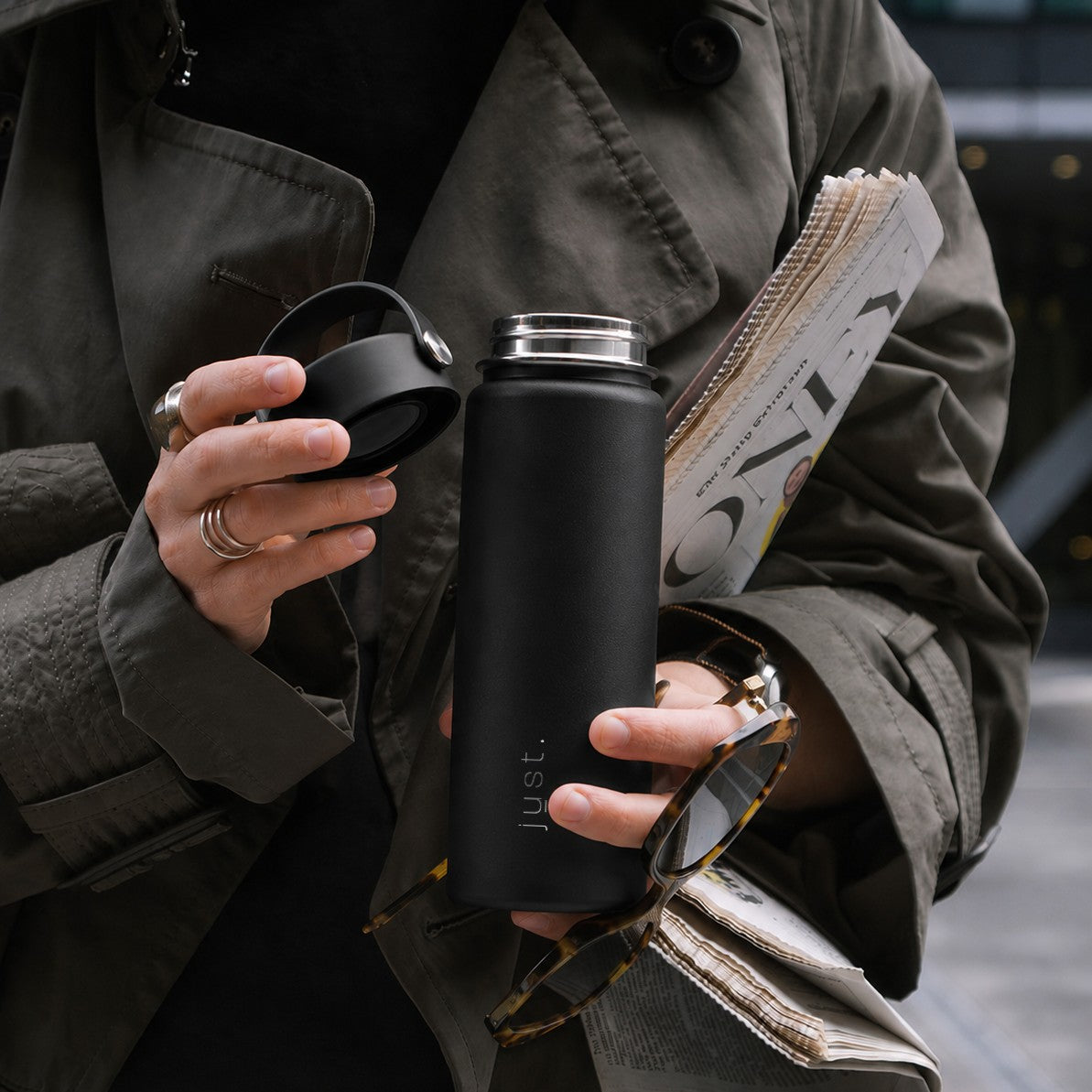
Example: You select a stainless steel bottle from Just Bottle’s Pioneer or Nomad range and apply your logo with laser engraving or screen printing.
Private label water bottles
- A fully customised product created exclusively for your brand.
- You control elements like shape, material, finish, colour palette, packaging — even storytelling or built-in QR codes.
- Higher minimum order quantities and longer timelines — but completely unique.
Example: A boutique hotel designs its own bottle shape inspired by its architecture, in a custom matte sage colour with engraved coordinates of the property and FSC-certified packaging.
In summary
| Feature | White label | Private label |
|---|---|---|
| Product design | Pre-made, existing models | Created from scratch for one brand |
| Branding | Logo, colour, packaging | Full creative control (shape, colour, finish, packaging) |
| MOQ | Low (50–100 units) | Higher (300–1,000+) |
| Lead time | 2–4 weeks | 6–12+ weeks |
| Cost per unit | Lower | Higher upfront, better long-term value |
| Exclusivity | Shared design across clients | 100% exclusive to your brand |
White labeling vs private labeling — the same idea in other industries
If the terms feel familiar, it’s because they come from retail. Supermarket own-brand ranges are classic private labeling: the retailer specifies the product and owns the recipe. Generic cosmetics or supplements sold under many different brand names are white labeling: one factory, one formula, many labels. Drinkware works the same way — the only real difference is that the “formula” is a mould, a material and a finish rather than a recipe.
When to choose white label bottles
White label works best when you need high-quality branded bottles — quickly, affordably and with minimal complexity.
Perfect for:
- Corporate gifting (onboarding packs, event giveaways, client gifts)
- Hospitality welcome amenities and conferences
- Startups or smaller brands testing merchandise for the first time
- Seasonal campaigns like Christmas or summer retreats
Mini white label checklist
✔ You want delivery in 2–4 weeks
✔ You don’t need custom moulds or bespoke silhouettes
✔ You prefer smaller order volumes (from 50 units)
✔ You want flexibility to reorder easily later
Important: white label doesn’t equal low quality. For example, Just Bottle’s stainless steel Nomad Bottles and rPET recycled plastic bottles still follow strict standards — BPA-free materials, LFGB/FDA compliance, 304-grade steel, and leak-proof testing. If you’re weighing up suppliers, our guide to choosing the right white label water bottle manufacturer covers what to check.
And, as one of the leading stainless steel water bottle wholesale suppliers, we work with organisations around the world to provide long-lasting, reusable bottles that people actually want to use every day.
When to choose private label bottles
Private label is for brands ready to create something iconic — a bottle that not only carries their logo but captures their identity.
Best suited for
- Luxury hotels, eco-resorts and design-led boutiques
- Fitness studios, retreat centres and wellness brands looking for cohesive member merchandise
- Companies building circular, refill-based systems
- Brands that want packaging and product to tell a sustainability story
What private label enables
- Custom shapes and moulds unique to your business
- Exact Pantone colour matching across stainless steel, rPET or ceramic-coated bottles
- Textured surfaces, engraving, sandblasted finishes or soft-touch coatings
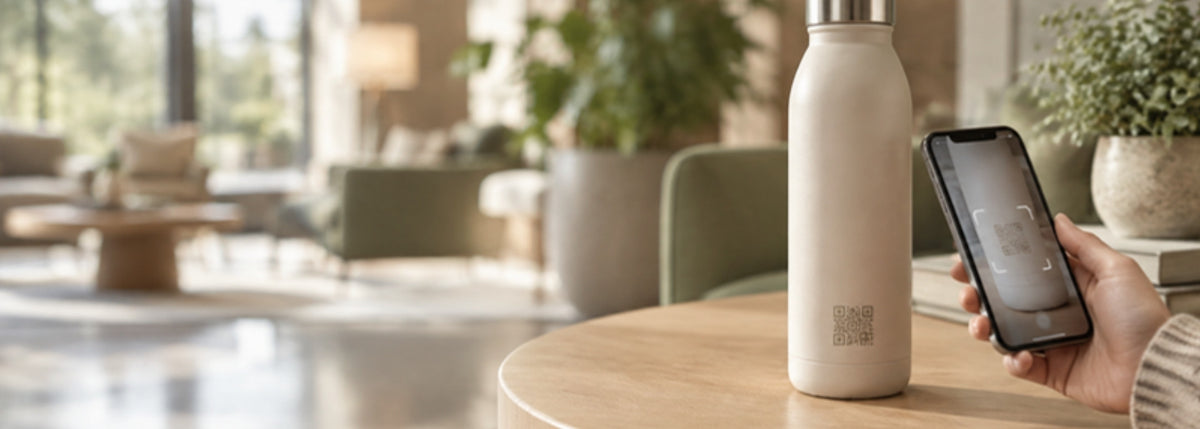
- QR or NFC technology linking to refill stations, resort experiences or impact reports
- Packaging that carries narrative — recycled cardboard, bespoke gift tubes, printed impact cards
Keep in mind
- Timelines are longer (6–12 weeks depending on moulding and testing)
- Minimums are higher — but per-unit cost drops significantly at scale
- You gain complete ownership of the design, creating long-term brand equity
For hospitality brands in particular, we’ve written about why private label water bottles have become a hospitality essential.
Comparing cost, timelines and control
| Factor | White label | Private label |
|---|---|---|
| Customisation | Logo, bottle colour, packaging | Shape, material, surface finish, packaging, QR storytelling |
| Production time | 2–4 weeks | 6–12+ weeks |
| MOQ | 50–100+ units | 300–1,000+ units |
| Per-unit cost | Lower upfront | Higher upfront, lower long-term |
| Branding impact | Strong for campaigns | Stronger for long-term identity |
| Ownership | Shared design | 100% yours |
Where the cost difference actually comes from
With white label, you pay for the bottle plus the branding application — engraving or printing — and that’s it. With private label, there are one-off development costs on top: tooling for a custom mould, colour development and sampling rounds. Those costs are fixed, which is why private label looks expensive at 300 units and sensible at 3,000. If you’re budgeting, our guide to how much custom branded water bottles cost gives a baseline for white label pricing; private label is best quoted against your brief.
Which option builds better brand recognition?
It depends on your goals.
- White label works best when you need agility — a gifting programme, conference or trial run. You can test how people respond without committing to large quantities.
- Private label builds equity — your product becomes recognisable, owns space in your guest’s life, and strengthens emotional connection to your brand.
Many brands begin with white label while they learn what style and size people love, then evolve into private label when demand grows.
A sensible path from white label to private label
- Start white label, small. Order 50–100 units of a proven model in one or two colours and put them in real hands — guests, members, new starters.
- Watch what gets used. Which size disappears first? Which colour do people photograph? Does the lid style suit the setting (gym vs desk vs bedside)?
- Reorder to confirm. A second white label run tells you whether demand is a one-off or a pattern.
- Brief the private label version. Bring the usage data to your manufacturer: the shape and capacity people preferred, the finish, and the story you want the packaging to tell.
- Keep white label for campaigns. Even with a signature private label bottle, white label stays useful for events, seasonal gifts and overflow.
Choosing a manufacturer that supports both
Whether you go white label or private label, the right manufacturer should make the process straightforward — not stressful. Here’s what to ask them (AKA, us).
Key questions
- Do you offer both white label and private label solutions?
- Can you provide samples before full production?
- Do your materials meet EU/UK/US compliance standards (LFGB, FDA, BPA-free)?
- Can you match Pantone colours or apply precise laser engraving?
- What are your MOQs and lead times for each option?
- Do you offer digital features like QR codes or traceable impact data?
- How do you handle sustainability — recycled materials, ethical labour, carbon reporting?
What Just Bottle provides
- White label: Stainless steel Pioneer, Nomad, Reclaim and rPET bottles — ready for branding.
- Private label: Fully custom design, colour and shape development, bespoke packaging options.
- Impact built in: Every order helps remove ocean plastic and supports coastal waste workers via our global partners. Read how our impact model works.
- Sampling support: Physical samples, digital mockups and Pantone matching available before production.
Frequently asked questions about white label vs private label water bottles
What is the difference between white label and private label?
White label products are made once and sold to many brands, each adding their own logo. Private label products are developed for a single brand, which controls the design and owns it exclusively. For water bottles, white label means branding an existing model; private label means creating your own.
Is white label cheaper than private label?
Per order, yes — there are no tooling or development costs and minimums start around 50 units. Per unit at high volume, private label can work out cheaper over time once the one-off costs are absorbed, but it needs a larger first order (typically 300–1,000+).
Can I turn a white label bottle into a private label one later?
Yes, and it’s the most common route. Brands usually run one or two white label orders to learn which size, colour and lid people prefer, then use that to brief a private label design. A manufacturer that offers both makes the transition much simpler.
How long does each option take?
White label orders typically ship in 2–4 weeks. Private label takes 6–12+ weeks because of mould development, sampling and testing. For Christmas or conference deadlines, work backwards from the date and add a buffer for shipping.
Does white label mean lower quality?
No. Quality comes from the materials and testing, not from whether the design is exclusive. A good white label bottle uses 304-grade stainless steel or certified rPET, is LFGB/FDA compliant and leak-tested — the same standards as a private label product.
Which is better for a hotel: white label or private label?
For a single property or a trial, white label gets quality bottles into rooms quickly. For a group with a strong design identity, or a brand that wants bottles guests take home and recognise, private label delivers more. Many hotels start white label and move to private label at the next refurbishment or rebrand.
Choose what fits your brand today (and tomorrow)
If you’re sending Christmas gifts to clients, stocking hotel rooms or launching a wellness product line — choosing between white label vs private label water bottles is about timing and vision.
White label gives you speed and flexibility. Private label gives you ownership and identity.
The smartest brands use both at different stages in their story.
If you want high-quality bottles that reflect your brand (without waste, guesswork or greenwashing) we’re here to help.
Explore our custom logo water bottles — custom stainless steel, Reclaim and rPET bottles, with branding support, eco-impact built in, and options for both white label and private label projects.